newspost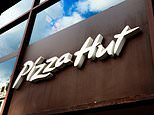
At its peak, Pizza Hut boasted nearly 400 British outlets. At the height of Thatcherism, it was opening a new place every week.
‘Stuffed crust’ was its gift to all humankind, it was a delightful and absurdly affordable place to neck food with your pals of a Saturday and its commercials featured the biggest names.
Ronnie Corbett, Pamela Anderson, even Mikhail Gorbachev – surely the ultimate hurrah in capitalism and the triumph of the West.
Or the celebrated outing of Gareth Southgate and Chris Waddell – with a bag pulled over Southgate’s head on account of his infamy for missing a crucial penalty at Euro 96. The subsequent graph-line for Pizza Hut’s Scottish fortunes was no doubt vertiginous.
But, today, the glory has departed: all is – almost – as Nineveh and Tyre.
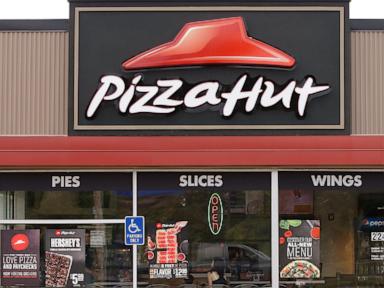
More than sixty Pizza Huts closed with immediate effect in Britain this week and over 1,200 people have lost their jobs. Fewer than seventy branches now survive and, despite brave talk of ‘restructuring’ and so on, one suspects the exercise will be of little more avail than pumping formaldehyde into a corpse.
When you hear of any big name folding, be it Debenham’s or a fast food outlet, you immediately ask yourself when you last visited one.
In the case of Pizza Hut, I’m struggling. I think Tony Blair was still Prime Minister. I do remember that the delivery was tardy and the pizza was not very good.
More than sixty Pizza Hut branches have closed with immediate effect in Britain this week
That the Morningside premises – takeaway only – are cramped, over-lit, naff and drab. Cycle-couriers hanging about in hoodies, with faces like unhappy weasels.
And that the menu – I walked by the joint most days, and sometimes eyed it – grew ever more disgusting. Beefburger pizza, chicken fajita flatzz. Texan BBQ; Cholulah Chicken Sizzler and the ‘Hot Honey Pepperoni Feast’.
Some evidently like this stuff, as one observer mused, ‘and it is good they are being saved from themselves…’
I n its pomp it was one of three pizza-toting national chains. You have to be getting on a bit to remember Pizzaland: it folded in 1996, after a calamitous marketing gimmick where, if you ordered one full price pizza, you could have a second for a penny.
As daft as Hoover’s infamous free flights or when Coca-Cola changed the recipe.
And, of course, Pizza Express is still with us: the stuff of princely alibis and consciously high-minded, like being Rory Stewart or not having stone cladding.
Marble tables, the cool blue glasses, things for your sprogs to colour in and the donation of 25p from every Padana pizza sold to worthy charities, which presumably excuses you buying The Guardian.
We have been chomping pizza in Britain since at least the Fifties and, if few foods are so convenient, it is difficult to think of any other exotic import that has been so debased. Like most of my generation, my first encounter was at school dinners – tepid rectangular slabs with a scone-like base and Day-Glo Scottish cheddar.
Then there are such outrages as the ham and pineapple ‘Hawaii’ combo or the soggy deep-pan American version.
And that’s before you entangle yourself in the surprisingly tricky origins of the dish.
The traditional line is that it was begotten as street food in Naples. But the Romans insist that only their particularly crisp offering is la vera pizza.
There is a very similar snack from bakeries in Armenia, the Spanish have an oniony version and, in south-east France, they insist the Italians nicked their cherished pissaladière.
To which any Italian can snap back, quite correctly, that until 1860 the Côte d’Azur was actually part of Italy.
What all agree is that pizza was a sort of bakers’ afterthought, made from leftover dough when the oven was still hot and the night’s batch of bread was done.
And that the mothership of all pizzas is the margherita – a simple covering of tomato, mozzarella and basil, and in colourful homage to the Italian flag. (The Margherita in question – if you accept this is a true story, rather than an ad man’s yarn – was Italy’s plump and pretty Queen).
Morningside’s Pizza Hut – balanced, up the hill, by the inevitable branch of Domin-oh-hoo-hoo! – particularly grated because, if Glasgow vies with Birmingham as the curry house capital of these islands, Edinburgh is justly famed for pizza. In Morningside alone you can enjoy some extraordinarily good ones. Stone Fired and La Favorita are particularly esteemed, though both are knocked into a cocked hat by the heights attained at Matto.
O r you can wilt into the local Pizza Express – in the repurposed Braid Parish Church, complete with The Prime of Miss Jean Brodie murals, probably because you glimpse the kirk for six seconds in the Maggie Smith movie – and order something the size of a manhole cover.
But even in Lewis we have some highly respected pizza joints, of which the cheekiest – and, by many, the most esteemed – is Crust Like That, operating out of a repurposed shipping container in the lofty village of Achmore, with ravishing views of the Harris hills.
Their pizzas are made fresh, the dough is proved for 24 hours and some ingredients sourced from Italy. All but two of 92 TripAdvisor reviews are five-star. ‘Standing Shroom Only’ is a particular hit.
Pizza Hut is arguably the last notable commercial casualty of the pandemic: its sales were seriously dented and have never recovered. Like McDonalds, it is an American-begotten franchise operation, which made it dangerously inflexible, and – unlike Pizza Express at one extreme and Domino’s at the other – it never seemed quite to know what it was for. Pizza Express is a pleasant place to linger with your family or peruse the New Statesman. Domino’s has never pretended to be anything more than a studenty hangover-rescue operation.
Pizza Hut sagged unhappily in the middle – fatefully, into an age when most of us have become much more picky about what we eat and Britain’s favourite fast food, fish and chips, is now for many prohibitively expensive.
Our Seventies passion for American sugar-high offerings has faded. And many now prize food of rootedness and sincerity – what the French call terroir – which Pizza Hut’s bleak joints and yukky offerings patently are not.
New online options for ordering takeaway have hit sales. But the central problem is the food, which is why few market analysts believe Pizza Hut can be rescued.
Luke Johnson of Risk Capital was one of not a few entrepreneurs to eyeup Pizza Hut as a possible acquisition – and quietly walked away.
The ultimate owners of the brand ‘had their system of conveyor oven pizza. I felt you could dramatically improve the performance by completely reinventing the product, and they wouldn’t have found that acceptable’.
It’s ‘out of date and the offering is tired,’ sighs Johnson. ‘People are eating more pizza than ever, but I think they want a better product, better ingredients – arguably a more authentic pizza.’

 poster