admin
admin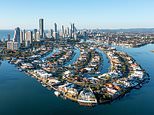
- Vacancy rate hits record low nationwide
- Tenants have reached affordability limits
By KYLIE STEVENS, SENIOR BREAKING NEWS REPORTER, AUSTRALIA
Published: | Updated:
The Gold Coast has overtaken Sydney and Melbourne to become Australia’s most expensive rental market.
Median house rents for the popular Queensland city soared to a staggering $900 a week and $803 for a unit.
Despite average rents plateauing since the December quarter, Sydney remains the country’s most expensive capital city, according to Domain’s March quarterly rental report.
House rents remain at a record $800 per week, while the average unit price of $750 has remained steady for a second consecutive quarter.
It’s the first time in five years Sydney rents have remained stable for two quarters.
Median unit rents in Melbourne rose by 4.3 per cent in the last quarter to $600 per week.
It remains the most affordable capital to rent a house at an average $590, despite a 1.7 per cent rise.
Over in the west, Perth unit rents jumped 5.3 per cent to $695, while houses soared by 5.7 per cent to $740 a week to be the second highest capital behind Sydney.
The Gold Coast has overtaken Sydney as Australia’s most expensive rental market
Sydney is still Australia’s most expensive capital city, despite rent remaining steady
Elsewhere across the nation, median rents in Hobart rose to $620 for a house and $500 for a unit.
Adelaide is the cheapest capital to rent a unit at an average $550, despite a 3.8 per cent growth since the last quarter, while a house will set you back $640 a week.
Brisbane rents have climbed to record highs of $680 for a house and $660 for a unit.
Darwin house rents rose by 2.9 per cent to a record $720, while units remain steady at $600.
In the nation’s capital, Canberra rents remained steady at $580 for units and $700 for homes.
While rents in several capitals remain steady, vacancy rates plunged to a record low of 0.7 per cent nationally.
‘Markets such as Perth, Adelaide and Hobart remain extremely constrained, while previously softer markets like Melbourne and Canberra are tightening again,’ the Domain report states.
‘This confirms demand remains strong and supply insufficient – but the price response is becoming more uneven and less responsive.’
While rents in Sydney and Canberra remain steady, vacancy rates have dropped to an all-time low. Pictured are tenants at an open inspection
Tenants are turning to alternatives such as moving further away from the city or moving in with family and friends
But tight supply alone can linger enough to drive rapid rent growth, as tenants reach their affordability limits.
‘We’re still seeing the same underlying conditions of high demand and low supply pushing rents up, but now unaffordability is putting the brakes on how much further they can go,’ Domain chief of research and economics Dr Nicola Powell said.
‘Usually, a low vacancy rate translates immediately into rental growth, but that connection is now loosening as such shockingly high rents are pushing people’s budgets to the extreme.’
Tenants are now turning to accommodation alternatives due to rising cost-of-living and fuel costs, along with economic uncertainty.
They include moving further away from city centres or desirable suburbs, or moving in with friends and family.
‘It illustrates the rental crisis is not easing, it is just going into a new phase,’ Domain national property editor Alice Stolz told the ABC.
‘Many renters out there are seeking more affordable options, going further down the train line and different types of accommodation.
‘They may have once wanted a house and are now compromising and going to a townhouse, apartment or a unit.’


 poster
 newspost