newspost
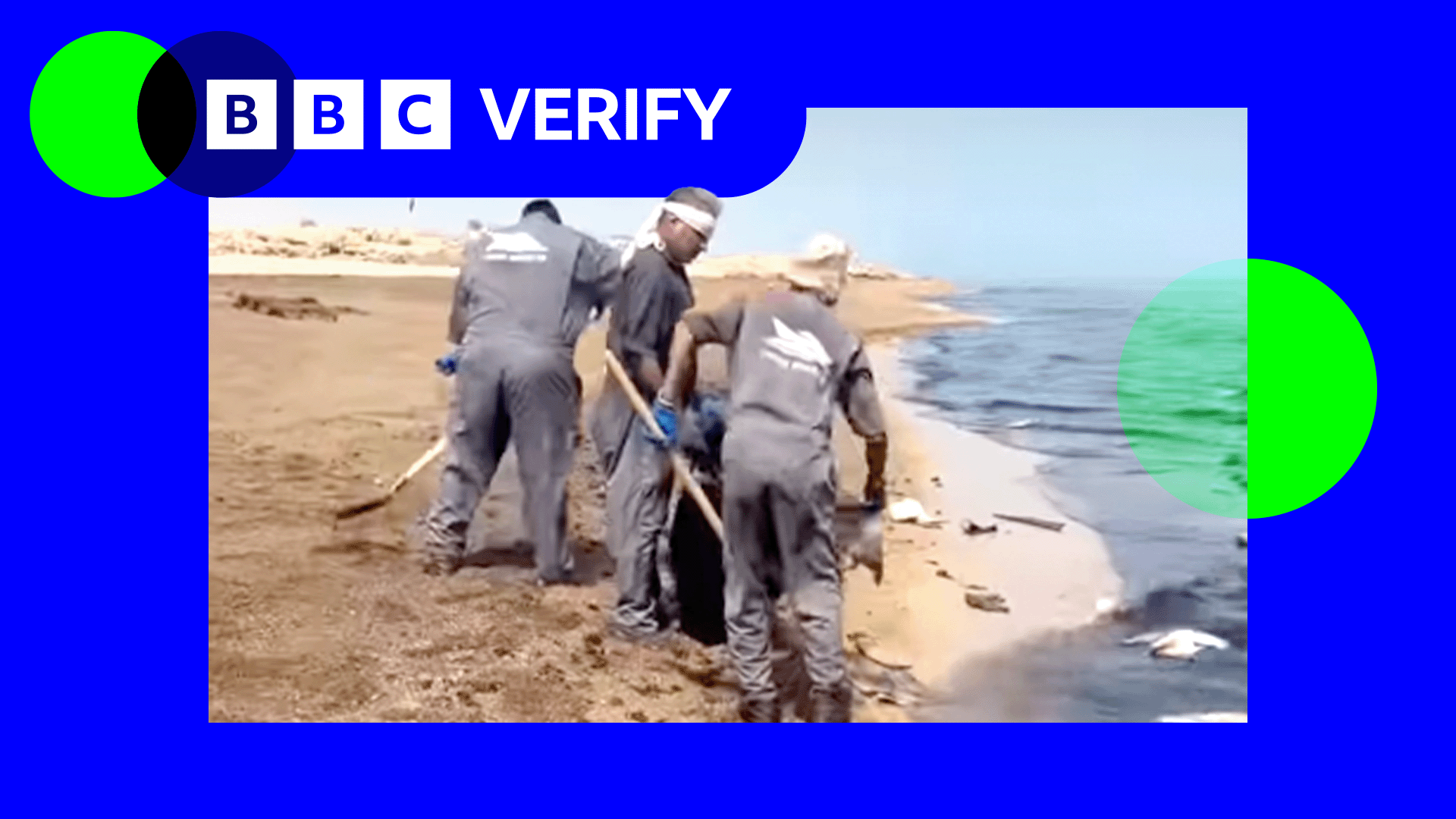
A screenshot from a video showing an oil slick in the water by a beach, with three men in overalls working to clean up the oil
ByKayleen Devlin, Barbara Metzler and Shayan Sardarizadeh
BBC Verify
Verified videos show a major oil slick washing up on Iran’s Qeshm Island, which analysts have said comes from a ship hit by a strike in the Strait of Hormuz.
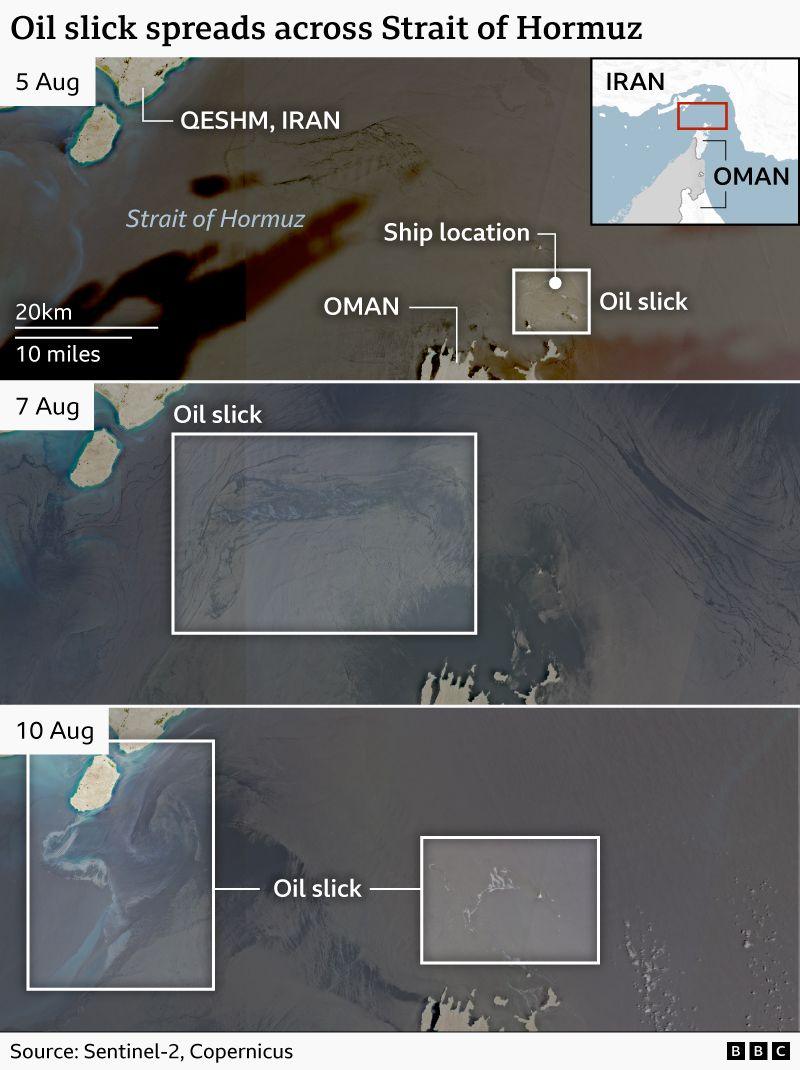
BBC Verify has also analysed satellite imagery suggesting the oil spill originated from an attack on a vessel in Omani waters on 3 August. A week later, the apparent fuel leakage from the Minoan Pioneer bulk carrier had spread across a large area of the strait.
Environmental experts say the spill threatens wildlife, protected ecosystems and fishing communities around Qeshm, which is home to mangrove forests, nearby coral reef habitats and nesting sites for critically endangered Hawksbill turtles.
Iranian media initially reported the origin of the pollution was under investigation and Iran’s foreign ministry spokesman said on Thursday its source was a “foreign bulk ship”.
A local environmental protection official has since said the spill has been “almost completely cleaned up”. BBC Verify has not been able to independently confirm this.
Verified videos show spilled oil reaching Iranian beach
Iran did not acknowledge being responsible, but shipping analysts have said it was likely to have been behind the Minoan Pioneer attack on 3 August.
Since the US and Israel began striking Iran at the end of February, data from maritime intelligence company Kpler indicates there have been 67 strikes on vessels in the vicinity of the strait.
Tehran has effectively blockade the waterway, responsible for about a fifth of the world’s oil and natural gas trade. The US has also imposed its own blockade on Iranian ports, which has led to several ships being attacked by US forces.
We have verified several videos shared on social media showing thick, black oil washing up on Suza beach in southern Qeshm. On the other side of the island is the Unesco-designated Hara Biosphere Reserve, home to vital habitats for marine life and migratory birds.
Qeshm, which lies on the northern side of the strait, is a key strategic base for Iran’s military and has been heavily attacked by the US – including a wave of strikes last month which killed three people, according to Iranian state media.
Satellite imagery from 10 August shows the slick visible across an area of more than 300 sq km (116 sq miles) – the size of more than 40,000 football pitches.
“This is what I would call a major oil slick,” said John Amos, CEO of Skytruth, a specialist satellite environmental monitoring group. Based on its size and colour, Amos estimates that the spill is “well over” 100,000 US gallons (380,000 litres) of oil.
While the extent of the damage to marine life is still being assessed, Dr Keyvan Hosseini, an energy and environmental expert from the University of Southampton, described the location of the pollution as “very concerning”.
He told BBC Verify that Qeshm is home to “sensitive coastal and marine habitats, including mangroves, turtle nesting areas and important fishing grounds”.
“This means the spill could have especially serious consequences for wildlife, ecosystems and local communities.”
Tracking the slick
On 3 August, shipping security firm Vanguard reported the Liberia-flagged bulk carrier Minoan Pioneer was struck by a projectile near Oman.
Satellite imagery from 5 August showed the vessel is still on fire. Alongside it was an oil slick stretching out over roughly 10 sq km.
Two days later, satellite imagery shows the slick had doubled in size and was spreading north-west through the strait towards Qeshm.
By 10 August verified videos show large amounts of oil washing up on shores of Qeshm Island, along with an ongoing clean-up operation.
Samir Madani, co-founder of maritime intelligence company TankerTrackers.com, told BBC Verify that he believes the slick originated from the Minoan Pioneer and described the attack and subsequent oil spill as a “self-inflicted wound by Iran”.
“Several vessels have been hit in that exact same spot by the Iranians when vessels use the Omani route,” he told BBC Verify.
Wim Zwijnenburg, an environmental conflict expert at Dutch peace organisation PAX, also believes the visual evidence points to the Minoan Pioneer as the source of the oil.
‘Tip of the iceberg’
The Minoan Pioneer is not the only vessel to have been damaged during attacks on shipping in and around the Strait of Hormuz.
Some of these attacks have resulted in marine pollution, including the sinking of container ship Safeen Prestige on 4 March following an attack near Oman. The UN’s International Maritime Organization reported that an oil slick was detected after that incident.
Zwijnenburg said whether an attack results in pollution depends on factors including where a vessel is hit, what cargo it is carrying and how much is on board.
He added attacks which disable a vessel can also create environmental risks even if they do not immediately cause an oil spill, as they can pose a risk to the environment by sinking or breaking down.
John Amos of Skytruth said that the oil visible on the surface may the “tip of the iceberg of the impact environmentally”, as heavier components of the oil can sink to the seabed.
“The oil that settles on the seafloor, depending on when and where it is, could persist for years,” he added.
Additional reporting by Ghoncheh Habibiazad, BBC Persian



 poster