First dinosaur bone from Antarctica found in a drawer

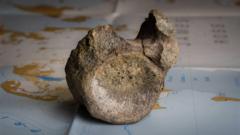
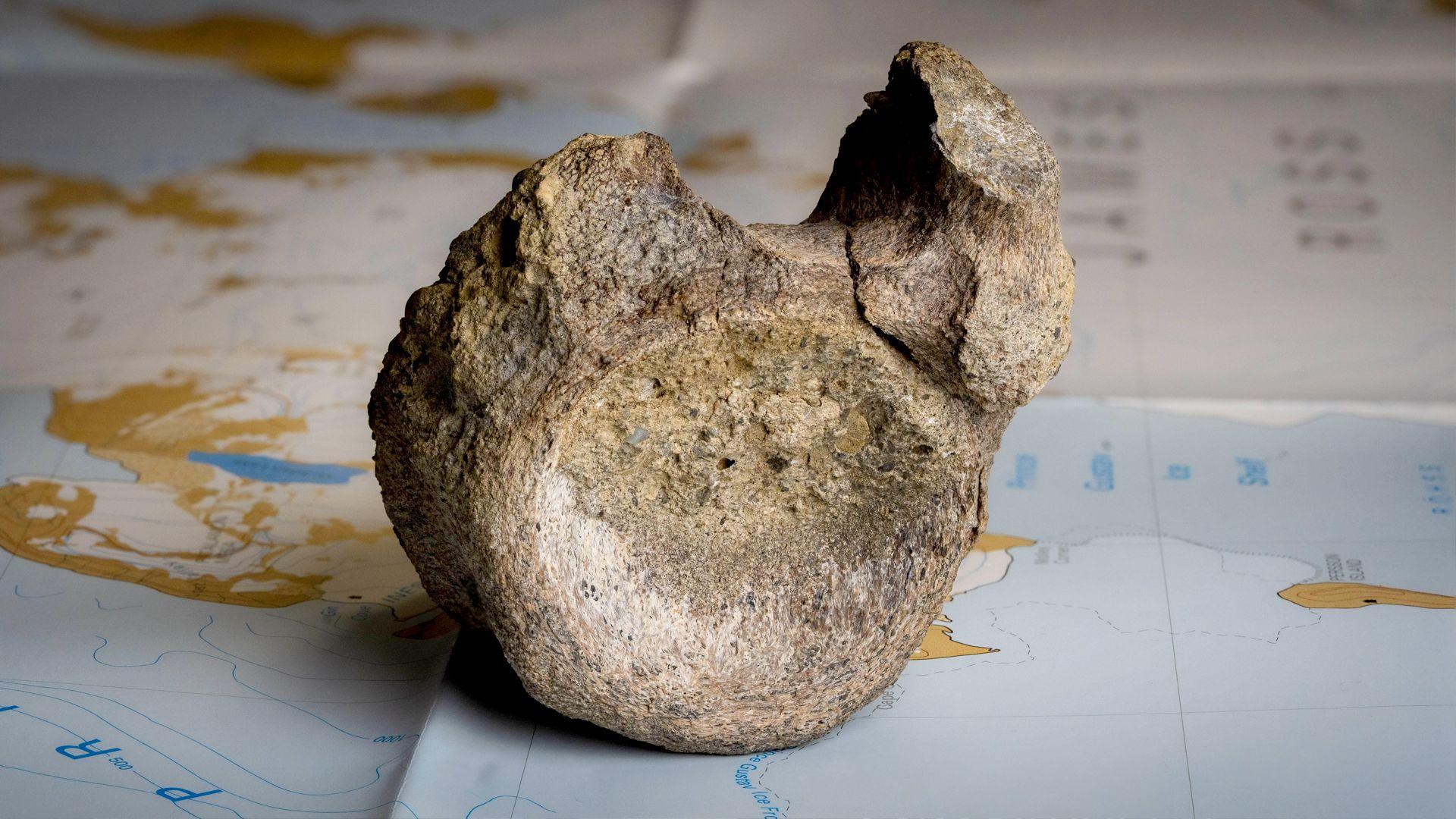
A fossilised dark brown, mottled bone is sitting on a map of Antarctica on a table. It is on a blue area of the map and areas of brown and white are behind it. The bone is a vertebrae with a round, concave, circular area facing the camera with a lump sticking up on the right hand side. Slightly further back a smaller lump is poking up on the left. There is a dip in between them. Image source, Tony Jolliffe/BBC News

Image caption,

The fossil was originally found in 1985 on James Ross Island in Antarctica

ByRebecca Morelle Science Editor and Alison FrancisSenior Science Journalist

An unassuming-looking fossil that spent 40 years lying forgotten in a drawer has turned out to be the first dinosaur bone ever found in Antarctica.

The specimen was unearthed in 1985, but the team that discovered it was not sure what it was – so it was stored away in the geology collection of the British Antarctic Survey (BAS) in Cambridge.

Now the fossil has been studied by palaeontologists who have confirmed that it is a tail bone from a type of dinosaur called a Titanosaur – this group contained the largest dinosaurs to ever walk the Earth.

The discovery helps to reveal more about how these beasts lived in a part of the world where the fossil record is sparse.
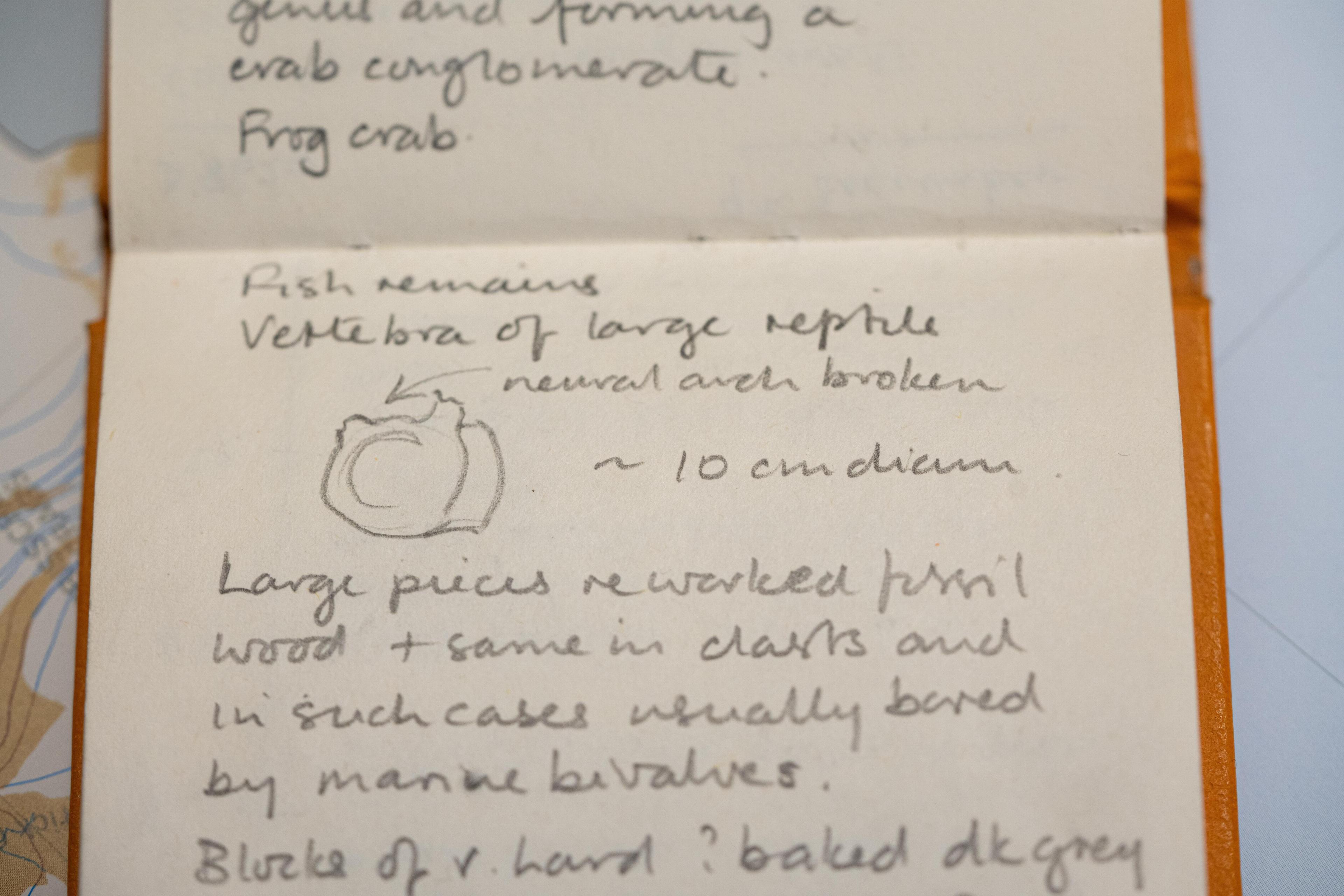
The orange covered notebook is open with the bottom of one page and the top of the next in view.  The pencil writing on it runs from top to bottom with the notebook turned lengthways . Just below the join of the two pages, which is formed by the spine of the book, there is a small, simple sketch labelled Image source, Tony Jolliffe/BBC News

Image caption,

The discovery was recorded in geologist Mike Thomson’s notebook

Dr Mark Evans, the collections manager at BAS, recently spotted the fossil amongst thousands of specimens brought back from expeditions to Antarctica over the decades.

“It’s only when you start thinking ‘what’s in this drawer’, that sometimes you come across something and you think, ‘Ah, this looks interesting’,” he said.

The specimen was originally collected on James Ross Island and its discovery was recorded in a field notebook kept by geologist Dr Mike Thomson.

Alongside a tiny, neat sketch of the fossil dated 9 December 1985 he has written “vertebra of large reptile”, noting it was about 10cm wide.

Evans says the team that found it probably thought the fossil belonged to a marine reptile.

But as soon as he saw it, Evans realised the vertebra looked very dinosaur-like. And the date of its discovery meant it would have been the first dinosaur fossil found on the continent.
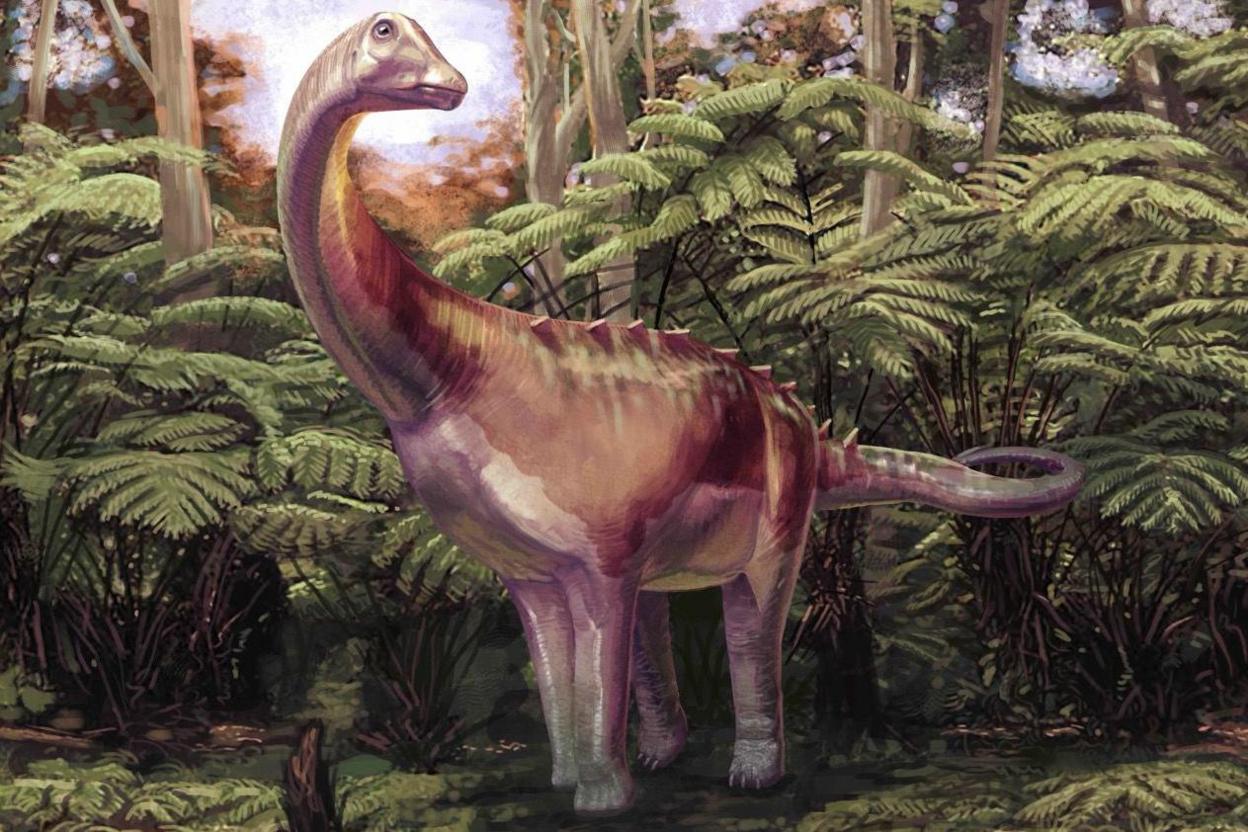
An artist's impression of a light brown Titanosaur, with its long neck and long tail. It's standing on all four legs amongst some green tree ferns.  There are some spikes running along its lower back and the upper part of its tail. It is turned towards us but its neck is slightly twisted as its small head, with a closed mouth, looks around slightly to its leftImage source, Andrew McAfee/Carnegie Museum of Natural History

Image caption,

When Titanosaurs inhabited Antarctica 80 million years ago it would have been covered in lush forest

He called in Prof Paul Barrett from the Natural History Museum (NHM) to confirm his discovery.

“Although it’s not too much to look at, it actually has a really distinctive shape,” Barrett told us, holding the fossil in his hands.

He pointed to a hollow on one end of the fossil and then turned it over to reveal a rounded bump at the other. The vertebrae line up to create a series of ball-and-socket joints running from head to tail.

“As soon as I saw it, I knew what we were dealing with… it was a dead cert we were dealing with a Titanosaur,” he said. “This is a combination of features that’s completely unique to these types of dinosaurs.”
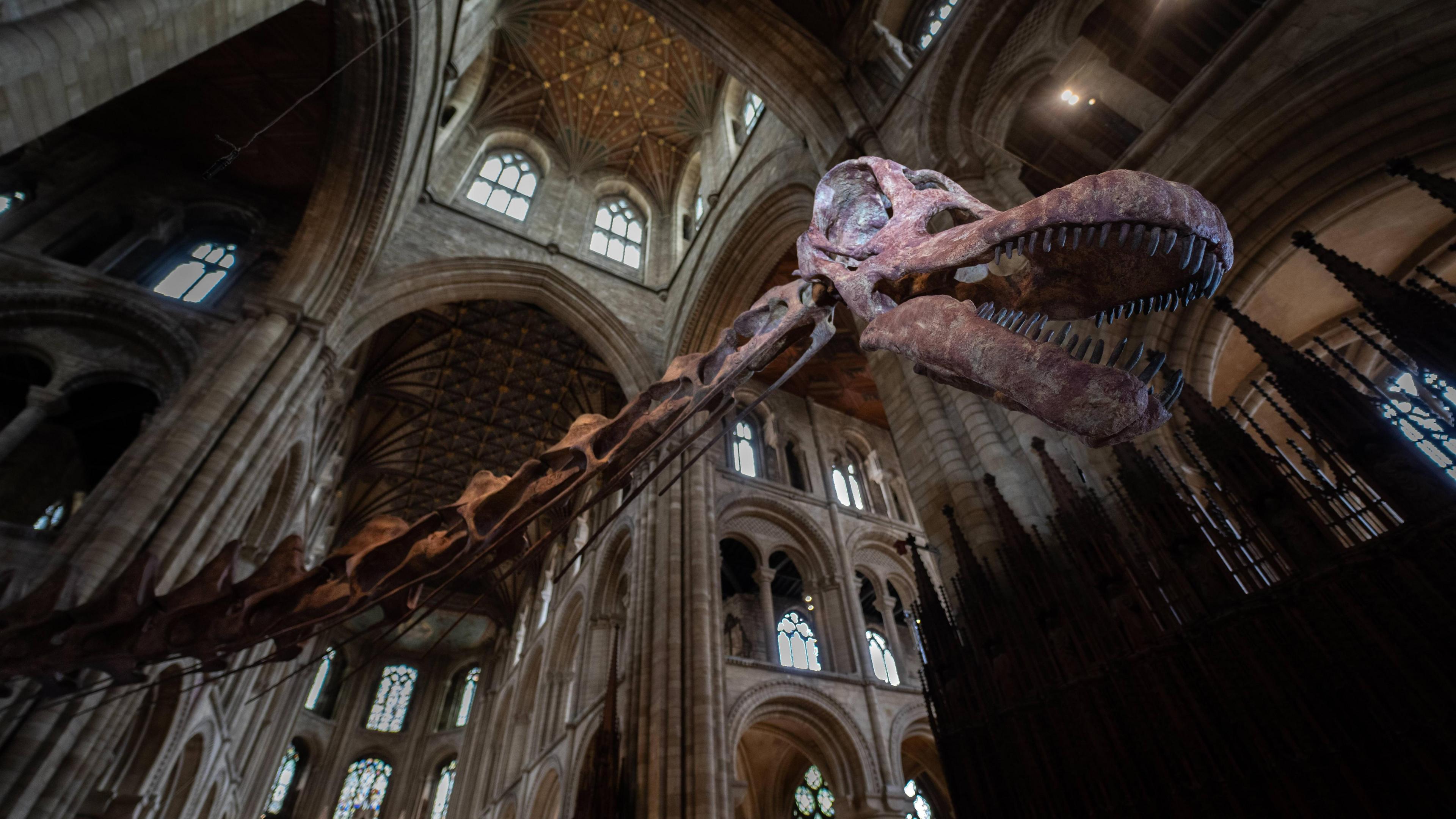
The neck and head of a Titanosaur skeleton cast is inside Peterborough Cathedral. The neck of the skeleton carries on, out of shot, towards the body of the animal round to the left of the picture and the head is on the right hand side. There are about twenty arches and windows of different sizes visible both above and below the skeleton at various levels. The Titanosaur's mouth is slightly open and its teeth are visible. The right eye socket of the dinosaur is lit and stands out in the photo. Image source, Tony Jolliffe/BBC News

Image caption,

A Titanosaur cast, on loan from the NHM, is on display at Peterborough Cathedral

More than 100 species of Titanosaur have now been identified around the world.

All are four-legged plant eaters, with very long necks that helped them reach up into trees and long counter-balancing tails. The very biggest Titanosaurs were more than 115ft (35m) long and weighed about 60 tonnes.

From the size of this tail bone, the scientists estimate the Antarctic Titanosaur was about 23ft (7m) in length.

“Maybe it was a juvenile dinosaur, or maybe it was a genuinely small one – one that was actually bucking the trend for the rest of the group as a smaller adult,” explained Barrett.

This dinosaur would have lived 82 million years ago during the Late Cretaceous Period when Antarctica was very different from how it is today. It would have been covered in lush forest, providing ample food for the plant-eating beast.
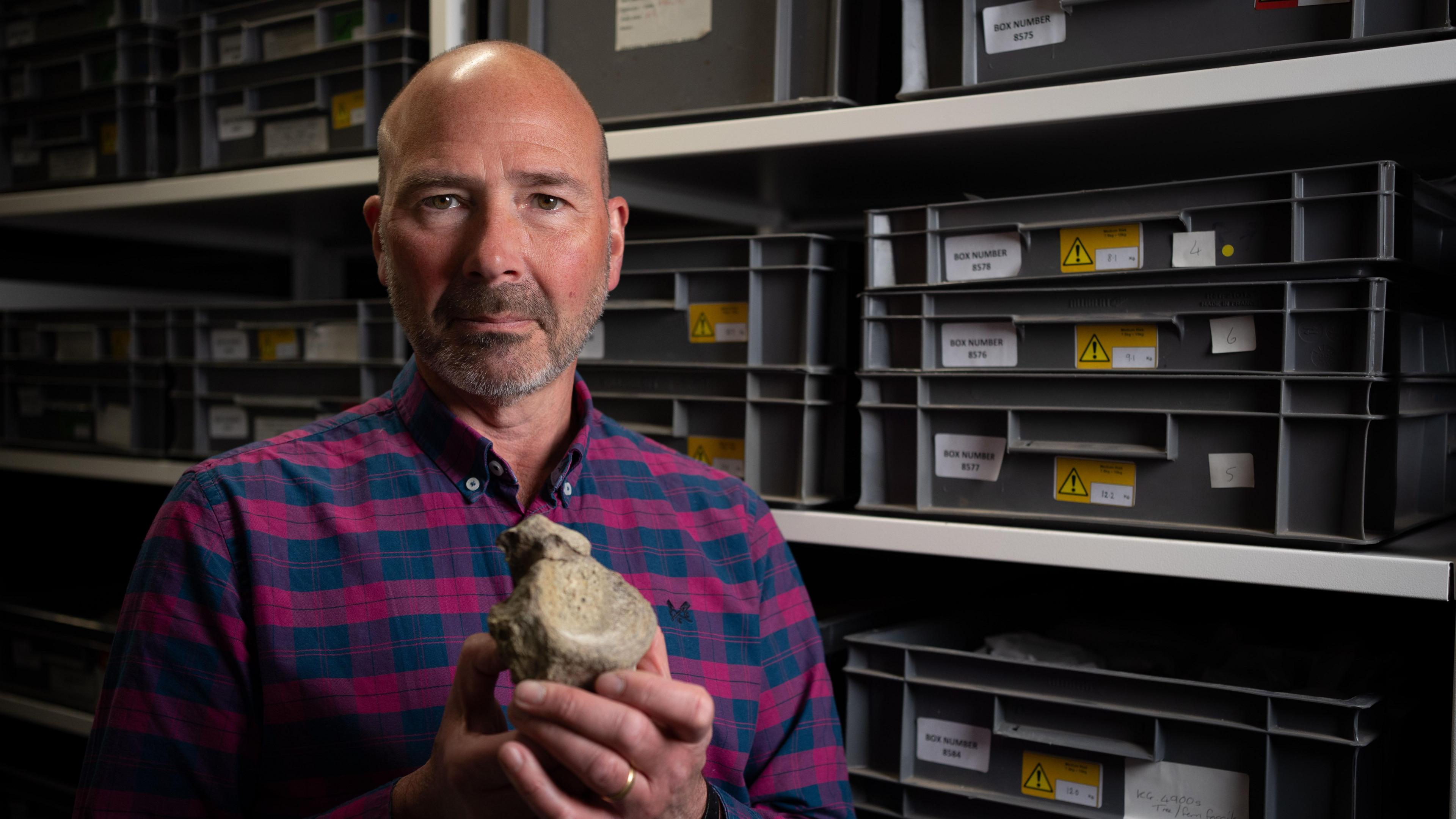
A bald headed man with a grey beard and moustache and wearing a red and blue checked shirt is looking into the camera. He is holding the fossilised vertebrae of the Titanosaur close to his chest with both hands. Behind him are three levels of light grey shelves with rows of dark grey boxes stacked up in columns of three. Each one has several yellow and white labels with their catalogue numbers. Image source, Tony Jolliffe/BBC News

Image caption,

Dr Mark Evans spotted the fossil in the British Antarctic Survey’s geology collections

The long-forgotten fossil now holds an important place in the history of exploration in Antarctica. Other dinosaur fossils have been found in this remote part of the world in the years after 1985 – but not very many.

Antarctica is a challenging place for palaeontologists to work and the ice conceals the prehistoric record in the rock beneath.

“It shows that an area that we now think is really uninhabitable was once actually very habitable and had this huge cast of characters living on it,” explained Barrett.

“It’s helping us to work out how they fitted into these broader ecosystems at the very bottom of the world about 80 million years ago.”

A paper on the discovery, external has been published in the journal Acta Palaeontologica Polonica.

Related topics

Read More

  • Related Posts

    Reform council set to become first ever to quit government’s refugee resettlement scheme as party says it proves they are putting British people first

    See more Daily Mail on Google – save us as a Preferred Source By CHRISTIAN CALGIE, SENIOR POLITICAL CORRESPONDENT-AT-LARGE Published: 15:07 EDT, 4 May 2026 | Updated: 16:44 EDT, 4…

    First images from inside Maldives death cave: Rescue team release photographs showing where five Italian divers lost their lives

    The first photos from inside the doomed Maldives cave system where five Italian divers died have now been released by the team that recovered their bodies. The group of divers…

    You Missed

    Miranda Hart reveals her ‘absolute biggest regret’

    • By poster
    • July 21, 2026
    • 1 views
    Miranda Hart reveals her ‘absolute biggest regret’

    Iran WALKS AWAY from peace talks in protest after furious Trump’s explosive outbursts threatening to ‘blow the s*** out of them’ and take over the country

    • By poster
    • July 21, 2026
    • 1 views
    Iran WALKS AWAY from peace talks in protest after furious Trump’s explosive outbursts threatening to ‘blow the s*** out of them’ and take over the country

    Andy Murray says he’s not been tempted to make Serena Williams-style return to the tennis court, but isn’t surprised American legend is back

    • By poster
    • July 21, 2026
    • 1 views
    Andy Murray says he’s not been tempted to make Serena Williams-style return to the tennis court, but isn’t surprised American legend is back

    Concertgoer, 51, who plunged to his death in front of horrified wife at Madison Square Garden is identified as ‘much-loved’ dad-of-two

    • By poster
    • July 21, 2026
    • 1 views
    Concertgoer, 51, who plunged to his death in front of horrified wife at Madison Square Garden is identified as ‘much-loved’ dad-of-two

    Ferry bosses forced to spend £600k of taxpayers’ cash on green fuel experts… because they don’t have staff with necessary expertise

    • By poster
    • July 21, 2026
    • 1 views
    Ferry bosses forced to spend £600k of taxpayers’ cash on green fuel experts… because they don’t have staff with necessary expertise

    Hidden past of Trump congressional pick… as hypocritical truth behind his hardline child predator boasts is revealed

    • By admin
    • July 20, 2026
    • 2 views
    Hidden past of Trump congressional pick… as hypocritical truth behind his hardline child predator boasts is revealed