admin
admin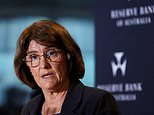
Struggling families have been hit with another blow after the Reserve Bank lifted interest rates by 25 basis points to 4.10 per cent – a move that will push mortgage repayments higher as economists warn cost-of-living pressures are far from easing.
The latest hike will add about $90 a month to repayments on a typical $600,000 owner-occupied home loan with 25 years remaining, compounding the strain already caused by soaring fuel and everyday expenses amid the Middle East war.
When combined with February’s increase, mortgage holders with an average loan could now be paying roughly $180 more each month than they were in December.
The 0.25 percentage point rate hike will lift the average variable rate for owner-occupiers into the six-per-cent range, reaching an estimated 6.01 per cent.
This is the first time this average has been above five per cent since April 2025.
A competitive rate is likely to sit at 5.75 per cent or less as a result of the hike, while the lowest variable rate is likely to land at or just below 5.50 per cent.
Ahead of the decision, money markets had almost fully priced in two further rate rises in 2026, which would bring the cash rate to 4.6 per cent by Christmas.
Chalmers said escalating tensions in the Middle East were adding to Australia’s existing inflation pressures, telling reporters in Canberra on Tuesday that the situation was ‘making that worse.’
Governor of the Reserve Bank of Australia Michele Bullock (pictured)
‘It’s not a surprising decision, but that doesn’t make it any easier for millions of Australians with a mortgage,’ he said.
‘We already had an inflation challenge in our economy but the war in the Middle East is making this challenge worse,’ he said.
‘The Board’s statement today does not mention government spending. As the RBA has made clear repeatedly this year, the pressure on inflation at the end of last year came from stronger than expected growth in private demand.
‘The Albanese Government’s three main economic priorities are addressing inflation, productivity and global uncertainty to help make our economy more resilient, and today’s decision highlights why this is so important.’
If the prediction of two more rate hikes proves correct, Australians with an average loan would be paying about $360 more a month on their mortgage compared to the end of last year.
Today’s cash-rate call is the first non-unanimous decision of the Reserve Bank’s Monetary Policy Board since July last year.
Chalmers said the narrow Reserve Bank vote underscores the ‘uncertainty’ gripping the global economy.
IFM Investors chief economist Alex Joiner said a split vote pointed to tensions within the board between inflation hawks and economic doves.
Australian mortgage holders are facing an escalating cost of living crisis with rates rising and petrol prices soaring as the war in Iran drags on
‘How events in the Middle East play out in terms of the severity and the duration of the energy price shock will be important with the Bank noting there’s “a wide range of possible scenarios”,’ he said.
‘Future decisions will hinge on these geopolitical developments just as much as domestic inflationary pressures.’
The RBA’s counterparts in the US, UK, European Union, Japan, Canada, Switzerland and Sweden are all expected to leave rates on hold this week when they meet.
However all are on alert as the Iran war and oil shock creates a renewed inflation threat, and central banks may be forced to delay cuts and in some cases consider hikes.
In a statement, the Monetary Policy Board said the conflict in the Middle East had pushed fuel prices sharply higher and, if sustained, would add to inflationary pressures.
‘Developments in the Middle East remain highly uncertain, but under a wide range of possible scenarios could add to global and domestic inflation,’ the board said.
‘In light of these considerations, the Board judged that inflation is likely to remain above target for some time and that the risks have tilted further to the upside, including to inflation expectations. It was therefore appropriate to increase the cash rate target.’
Matt Grudnoff, Senior Economist at The Australia Institute, said the Reserve Bank had made the wrong decision.
If the prediction of two more rate hikes proves correct, Australians with an average loan would be paying about $360 more a month on their mortgage compared to the end of last year
‘Inflation caused by a supply shock cannot be brought down by increasing interest rates. How can increasing Australian interest rates open the Strait of Hormuz?’ he said.
‘The increase in fuel prices is already acting to reduce demand in the Australian economy.
‘Higher petrol and diesel prices mean people have less to spend on other things, and as these fuels are largely imported, all the extra revenue is flowing overseas.
‘All this increase in interest rates will do is heap more misery on Australian mortgage holders who are already being hurt by higher fuel prices.
‘The RBA needs to be honest with the Australian people that nothing it can do will reduce inflation caused by a world oil price shock.
‘At a time of great economic uncertainty, now is not the time for the RBA to be tapping the breaks, trying to slow the economy down.’
Compare the Market’s Economic Director David Koch warns the painful combination could be ‘over-kill’ threatening to push Aussies to the brink of a recession.
‘Nobody wants another rate hike – we’ve already had one this year – and that means millions of homeowners are spending thousands more on their repayments,’ Mr Koch said.
When combined with February’s increase, mortgage holders with an average loan could now be paying roughly $180 more each month than they were in December
‘It feels like a kick in the guts, because so much of this is out of our control. Once again, it’s homeowners that will be saddled with the biggest burden.
‘But inflation is a prickly issue and that means it’s not one we can sit on. Every month we wait to act could be precious time lost in the fight against more expensive groceries, power bills and insurances. The Reserve Bank is getting serious, but I fear this is taking the pain a touch too far, too fast.’
As crude oil prices surpass $US100 a barrel economists are concerned about headline inflation, now at 3.8 per cent, climbing closer to 5 per cent.
This would push inflation even further away from the RBA’s 2-3 per cent target and risk reviving the consumer price pressures seen in 2023, when the Reserve Bank was last repeatedly raising interest rates.
AMP chief economist Shane Oliver said the RBA decision was a ‘double whammy hit’ for households with the weekly household petrol bill likely already at record levels.
‘If petrol prices stay at current levels, it will cost the average household around an extra $78 a month versus their February average,’ he said.
‘So nearly a $190 a month extra impost for those with an average mortgage and a car that’s not electric, which is quite a hit.’
CreditorWatch chief economist Ivan Colhoun said the RBA’s decision was justified.
‘While this is news that is unwelcome for both households and businesses, neither is the situation where inflation is allowed to run above-target for a further extended period,’ he said.
The Board’s decision is expected to take some of the heat out of the housing market, partly unwinding the boost to borrowing power that followed the 2025 rate cuts, warned Domain’s chief economist Nicola Powell.
‘We expect values to keep rising, but at a slower and more moderate pace. That said, some pockets of Sydney are likely to show more weakness than others,’ she said.
‘While higher borrowing costs are limiting how far buyers can stretch their budgets, entry-level housing is still likely to outperform, partly due to government incentive programs.’


 poster
 newspost