admin
admin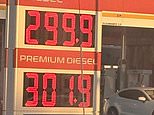
Latest empty bowser figures revealed
Energy Minister Chris Bowen has given a state-by-state update on petrol stations that have run out of fuel.
He told parliament on Wednesday that 187 stations in NSW had no diesel, while 32 had no stock.
‘That’s down 19 on yesterday,’ Bowen said.
“That’s out of a total of 2417 service stations in NSW.
‘In Victoria, 134 with a lack of one or more grades. That’s down 28 on the last report.
In Queensland, 55 service stations had no diesel, while 35 were out of regular unleaded, the same figure as yesterday.
In South Australia, 49 out of 700 stations had no fuel, while in Western Australia, six have no fuel stock, while four are with no diesel out of 771 stations.
In Tasmania, one station has no diesel while six have run out of unleaded.
In the ACT, one station has run out of diesel, which will likely be rectified later today.
There are no shortages in the Northern Territory.
But Bowen acknowledged that the Top End is in the grips of a natural disaster, which has impacted road access.
Pictured below is a Rockdale service station in Sydney’s south on Wednesday after it ran out of fuel stock.


Fuel crisis pushing Aussie families to breaking point
Soaring fuel prices could push millions of Aussie families to ‘breaking point’, with the weekly shop set to become even more expensive.
The US-Israel-led war on Iran, now in its fourth week, has seen fuel prices skyrocket as Iran continues to block oil supplies, with Australian farmers warning costs could flow through to shoppers within weeks.
CEO of food waste app Saveful, Kim McDonnell, said she expects fruit, vegetables and dairy products to be among the first grocery items to see prices surge.
‘Farmers are estimating grocery prices to go up another 16 per cent in the next month or so, which is staggering, and will be the tipping point for a lot of families,’ she told Daily Mail.

Asian nation’s fuel offer to Australia
Japan has indicated that it could come to Australia’s rescue if our fuel crisis escalates.
More than 500 service stations across Australia are now without one or more types of fuel, as the price of diesel soared past $3 a litre.
Japan, which has 250 days of fuel supply in reserve, has suggested that it may assist if Australia’s fuel shortage worsens.
The offer could be in the form of a potential liquified natural gas (LNG) swap for fuel.
But Japan’s ambassador to Australia stopped short of making a firm commitment.
‘We really need to see the market situation in Australia first and then we need to deepen our communication between the two countries,’ Kazuhiro Suzuki, told a Minerals Council of Australia conference on Wednesday.
‘Maybe we could collaborate and then do something together. That’s the only answer that I can give to you now.’
He added that its existing supply of oil to Australia had not stopped.
‘We are continuing to supply our oils, but in the future, we probably need to have a further communication as to, you know, what we can do together,’ Mr Suzuki said.
It comes after Prime Minister Anthony Albanese signed a joint statement with Singaporean counterpart Lawrence Wong, affirming the two nations’ commitment to energy security.
Mr Suzuki neither embraced or ruled out possibility of a similar arrangement between Japan and Australia.
‘I don’t think [we’re at] that stage,’ he said.
Resources minister Catherine King later added: ‘I believe very much in that relationship between our two countries and the government of Japan is well aware of how we can best work together, and it’s all about energy security, whether that be LNG from Australia to Japan or in liquid fuel security from Japan back to Australia.’


Fuel price gouging fines doubled to $100MILLION
Treasurer Jim Chalmers has put petrol companies on notice by passing tougher price gouging laws through parliament.
The maximum penalties for those seeking to profit from the Middle East conflict by hiking up fuel prices have been doubled from $50million to $100million.
‘Since the start of the war, we have seen much higher prices for petrol and diesel across the country,’ Chalmers told the parliament on Wednesday.
‘It’s put more pressure on motorists and families who are already doing it tough.
‘Our message to petrol retailers has been very clear, you are on notice. Do not use this conflict to take advantage of Australians.’
The Australian Competition and Consumer Commission has so far received more than 500 reports of price gouging since the Iran war started in late February.

Fuel crisis forces Jetstar to cut NZ flights
Jetstar has axed dozens of New Zealand flights due to the rising cost of jet fuel amid a global oil crisis.
The airline confirmed on Thursday that it will cut 12 per cent of services due to soaring fuel prices caused by the ongoing Middle East conflict.
Flights between Auckland and both Sydney and Brisbane will be affected.
Domestic flights in New Zealand between Auckland and Christchurch and Wellington have also been affected.
The changes will come into effect in May, according to specialist aviation analytics firm Cirium.
‘We have made some temporary changes to our schedule, including due to a rise in jet fuel prices as a result of the conflict in the Middle East and other rising costs,’ a Jetstar New Zealand spokesperson said.
‘All impacted passengers have been contacted directly, and most have been offered same-day travel.
‘We are sorry for the inconvenience and thank our customers for their understanding.’
It comes after Air New Zealand announced plans to cancel 1100 flights in the coming weeks in response to fuel price hikes.

How much the average fuel prices in your city are today?
Sydney: Unleaded 91 250.8c/L, Diesel 306.3c/L
Melbourne: Unleaded 91 250.5c/L, Diesel 298.2c/L
Brisbane: Unleaded 91 246.7c/L, Diesel 305.7c/L
Perth: Unleaded 91 258.0c/L, Diesel 299.9c/L
Adelaide: Unleaded 91 249.4c/L, Diesel 297.9c/L
Truckie’s dire warning about the fuel crisis: S**t show’
A truck driver and fleet owner says she may be forced to shut down her business as the nation’s fuel crisis intensifies.
Sharna Chapman, who runs Runnymede Trucking Company in Echuca on the Victoria-NSW border, warns that soaring fuel prices – driven by escalating conflict in the Middle East – have pushed some trucking companies to breaking point.
Her fuel expenses have jumped by $20,000 in the past month alone, and by March 18 she had already matched her entire fuel bill for February.
To stay afloat, her drivers have taken several days off to cut fuel use.

Mounting calls for Australia to produce its own fuel
There are growing calls from Aussies for the nation to produce its own fuel as the global oil crisis escalates.
Fuel costs have soared since the US and Israel launched co-ordinated attacks on Iran, resulting in the closure of the Strait of Hormuz, where 20 per cent of the world’s oil flows through.
The crisis has reignited debate about whether Australia should be producing more of its own fuel, rather than relying on exports mainly sourced from Asian refineries.
Australia has just two operating refineries left in Geelong and Brisbane, importing 90 per cent of the fuel they produce.
Many Aussies online agree that the nation should be more-self-sufficient.
‘We shouldn’t have to rely on the rest of the world for everything,’ one commented.
Another added: ‘Australia has all the minerals and energy in a large continent with only 29 million people.’
A third wrote: Should have been doing it years ago.’

Gina Rinehart calls for fuel tax to be scrapped
Mining magnate Gina Rinehart has urged Anthony Albanese to axe the fuel tax and stop treating it as a luxury during a global oil crisis.
Aussies continue to be slugged with a 52 cents per litre excise tax as the cost of fuel soars past $3 a litre at the bowser due to the Middle East conflict.
Up to 20 countries, including Italy, Spain, Croatia, Portugal, Brazil, and Ireland have recently cut their fuel excises to help motorists cope with rising fuel costs.
Australia’s richest person wants our government to follow suit.
‘Fuel is not a luxury purchase but it is taxed like it is,’ Ms Rinehart told the Daily Telegraph.
‘It is an essential input into daily life and into almost every sector of the economy.
‘Higher fuel costs do not just affect motorists, they push up the cost of transporting goods, running farms, operating many small businesses and delivering services.’
Mrs Rinehart believes that the priority should be on relieving the financial burden on Aussies, rather than increasing it.
‘For the average driver, removing the excise would save around $2,000 a year – money they pay after they’re already taxed,’ she added.
‘For people living in major cities there may be alternatives, but in regional Australia driving is a necessity.’
Federal Treasurer Jim Chalmers told parliament on Tuesday that cutting the fuel tax was ‘not something we have been considering’.
The former Coalition government halved the fuel excise from 44.2 cents per litre to 22.1 cents for six months in 2022 following Covid.


Treasurer warns Middle East impacts could be worse than Covid
Federal Treasurer Jim Chalmers has warned that the financial impacts of the ongoing war in Iran could be worse than Covid and the Global Financial Crisis.
He told 100 business leaders on Tuesday night that the end of the war ‘can’t come soon enough’.
He also made a startling admission that predictions made last week about the local impact from the Middle East crisis may be too conservative.
Oil prices are now higher than previously forecast with more industries set to the hard hit.
‘This is the fifth big global economic shock in less than two decades, it could be just as serious as the four before it,’ Chalmers said.
‘We are well placed and well prepared, but we will be buffeted.
‘Two things matter most here, how long the war lasts but also how long it takes to get the global economy back on track after it ends.
‘We’ve seen the positive market response from speculation about US negotiations with Iran and from an economic point of view it’s clear the end of the war can’t come soon enough.’
The dire warning comes as the latest ANZ-Roy Morgan survey revealed that consumer confidence has hit its lowest point since records began in 1973.
Chalmers hinted that the May budget will include support for businesses.
‘The productivity package will be substantial and it will be all about making it easier and faster to build, more attractive to invest, and to try and get some of your compliance costs down,” the Treasurer said.
Opposition Leader Angus Taylor will address business leaders on Wednesday.

Albanese government not ruling out a $40 limit on fuel purchases
The Albanese government has not ruled out imposing a $40 limit on fuel purchases as part of national rationing measures, though ministers say the situation has not escalated that far.
Petrol pumps would be programmed to shut down at the $40 mark, though the rule could only take effect if the Governor-General declares a liquid fuel emergency after advice from Energy Minister Chris Bowen.
Education Minister Jason Clare said the cap was part of emergency contingency plans but insisted Australia had not reached that stage yet.
‘I think it was originally set up under John Howard and that sets out the different sort of contingency measures that governments would take if needed,’ he told the ABC.
‘We’re not there yet
‘They’re the sorts of measures that we’re taking to make sure that people have got petrol to put in the tank and diesel for farm equipment, as well as for vehicles in the cities. But any talk of rationing, I think it’s way too soon to be talking about that.’
Clare echoed Jim Chalmers’ concerns that the unfolding Iran conflict had the potential to hit the economy as hard as the pandemic or the global financial crisis.
‘We’re not having bombs dropped on us, but we are being hit by it and we’re being hit at the petrol station.
‘I think Jim is absolutely right when he says all of this depends on how long this goes on and then how long it takes the world economy to recover from it,’ he said.

Aussies warned rubbish might not be picked up as fuel crisis drags on amid war in the Middle East
Australia could face widespread rubbish pile-ups within weeks as waste collectors warn fuel shortages and soaring diesel prices are pushing the sector to breaking point.
Waste contractors warn disruptions are fast approaching, but they have not been granted priority status for diesel under emergency fuel arrangements.
Peak industry groups have joined forces to write to Energy Minister Chris Bowen, warning that vital services such as hospitals, aged care facilities, and supermarkets rely on continuous waste removal to maintain safe operations.
The letter warned that service disruptions would cause public health problems within 48 hours due to not being regarded as an essential service.
Disruptions to garbage collection could begin in coming weeks unless the Albanese government acts quickly.
‘The waste and resource recovery sector provides a critical service that underpins public health, environmental protection, and the functioning of our communities and economy across all of Australia, including regional and remote areas,’ Waste Management and Resource Recovery Association of Australia chief Gayle Sloan said.
‘The reliable collection, transport and processing of waste cannot be paused or deferred. Any disruption risks public health, environmental harm, and significant community impacts.’
Industry leaders have travelled to Canberra in the hope of securing a meeting with Assistant Environment Minister Josh Wilson to discuss urgent supply and price issues.
‘Not being listed is potentially catastrophic to our entire sector, and it’s going to lead to significant health and environmental issues,’ Waste Contractors and Recyclers Association of NSW chief Brett Lemin said.
‘We are literally the back-end … of pretty much every single industry, every single operation that happens across this country.
‘If we cannot fuel trucks and we cannot fuel processing equipment, we cannot collect rubbish, we cannot collect recyclables.’
Waste collectors are also being squeezed by increased fuel prices, with many now operating at a loss.
Council agreements often exclude fuel surcharge protections, leaving companies to absorb the hit.
Leaders warn some smaller operators may shut down collections or trigger ‘force majeure’ if diesel climbs towards $4 a litre.


Key Updates
-
Latest empty bowser figures revealed
-
Asian nation’s fuel offer to Australia
-
Fuel price gouging fines doubled to $100MILLION
-
Fuel crisis forces Jetstar to cut NZ flights
-
Gina Rinehart calls for fuel tax to be scrapped
-
Aussies warned rubbish might not be picked up as fuel crisis drags on amid war in the Middle East