poster
As 2025 treads glumly into its final hours after twelve months of political inanity and economic torpor, we must gird ourselves for 2026 and whatever tribulations it has planned for us.
It will be a year of reckonings. Reckonings at Holyrood and Westminster; reckonings for Keir Starmer, John Swinney, and Kemi Badenoch – and perhaps most eagerly-awaited of all, Nigel Farage.
Top of the pile will be the Scottish parliament elections. Come election day, the SNP will have been in power at Holyrood just shy of 19 years, and only the bravest of Bravehearts would try to paint two decades of Nationalist rule as a triumph for Scotland or her people.
The NHS treatment queues the SNP came to power promising to tackle persist, with the Nationalists consistently failing to meet waiting times targets they introduced.
Their record is even worse on education, with the attainment gap they undertook to close yawning wider than ever.
Then there’s the nationalised shipyard that took a decade to build two eye-wateringly expensive ferries.
The breaking of pledges to upgrade dangerous roads in service of Net Zero dogma, followed by the ditching of climate targets when they became too hard.
Not to mention a failed independence gambit, unyielding fixation on gender woo, and sundry scandals from iPad bills and grooming gang inquiries to a legislative foul-up on non-domestic rates.
SNP leader John Swinney faces a Holyrood reckoning next year
Most governments with a report card like this would be heading for a ballot-box battering, but if the polls are even vaguely accurate the SNP is heading for an unprecedented fifth consecutive term in government.
In which case, the reckoning will be for the opposition parties, in particular the Conservatives and Labour.
Both have capable leaders who have done yeoman’s work challenging the SNP on the state of the justice system, the decline of the NHS, and the culture of secrecy within the Scottish government.
It might be immensely frustrating to Russell Findlay and Anas Sarwar that, despite everything, the electorate prefers John Swinney.
It might be contrary to the voters’ interests to give the SNP another five years to confirm its inadequacy, but democracy is the prerogative to choose. There is no obligation to choose wisely.
Options remain for Findlay. Being anti-woke, anti-independence, anti-everything the SNP stands for has got him as far as it can.
Now he should focus on what Swinney considers to be his strong point – his largely self-invented ‘Honest John’ reputation – and draw the voters a contrast between Swinney’s public face and the opaque and unaccountable character of his government.
In seats where the Tories can mount a credible alternative to the SNP, they should make the election a referendum on the integrity of the First Minister and his government. Nothing would rattle Swinney more and a rattled leader is a leader who makes mistakes.
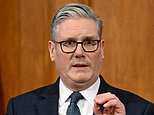
Sir Keir Starmer led Labour to a comprehensive landslide – only to become despised within a short span of time. He must carry the can for his party’s polling
Yet should Labour and the Tories suffer a particularly bad night in May, expect a grisly post-mortem.
That debate might well take place against the backdrop of a Reform surge that gives the party a gaggle of list seats.
The election will be a reckoning for Reform, too. It will be a test of their appeal in Scotland, their ability to work the electoral system, the quality of MSPs they return, and their effectiveness in holding the SNP to account.
With office comes scrutiny and as we have seen in local government down south, scrutiny has exposed Reform’s weaknesses, not least in candidate vetting and translating populist rhetoric into policy action.
Should the election result in another SNP victory, and particularly if between them the Nationalists and the Greens hold a majority of seats, it will be time for a reckoning on devolution itself.
An experiment introduced by Labour and doubled down on by the Tories, devolution was supposed to strengthen the Union and knock the politics of separation on the head.
In fact, Holyrood has been the making of the SNP, giving the party its first taste of executive power and allowing it to build up a rival seat of authority to Westminster.
Devolution was a historic mistake made by intellectually middling yet supremely arrogant constitutional wreckers and it will come to serve as a much-deserved millstone to their legacies. But there will also be reckonings beyond the Scottish parliament.
Kemi Badenoch has shown signs of growing into her role as Tory leader, holding Labour’s feet to the fire at Westminster
At Westminster, the reckoning will be for Keir Starmer. It is all but unprecedented for a government to be elected in such a comprehensive landslide only to become despised within a short span of time.
The man who must carry the can is the Prime Minister.
He has shown himself to be lacking in judgement, as demonstrated in the Lord Alli freebies row, the attempted removal of the winter fuel allowance, and the vacillating over a grooming gangs inquiry.
Starmer has struggled to overcome his aloof, lawyerly manner and evident remoteness from the lives and priorities of ordinary people.
There are scapegoats, of course. Chancellor Rachel Reeves has managed to make herself unpopular on the government benches, the opposition benches, in the City and in households up and down the land – essentially everywhere.
His No 10 enforcer Morgan McSweeney has made enemies across the party and a faction of backbenchers blame him for Starmer’s strategic blunders.
The Prime Minister has remained loyal to his chief of staff thus far but the more vulnerable his own position becomes, the likelier it is that he throws Reeves or McSweeney or both to the wolves.
While this might appease Labour MPs and union bosses, it will only do so for a time, because Starmer’s problem isn’t Reeves or McSweeney. Starmer’s problem is Starmer.
Labour MPs have never replaced a sitting Prime Minister but these are febrile times and the prospect of losing their seats after just one term could drive some to take drastic measures.
The final reckonings will be for two very different politicians whose fates are nevertheless entwined.
Kemi Badenoch had a stinker of a start to her leadership, though in recent weeks there have been signs of improvement.
Nigel Farage has had a dream year, topping opinion polls, romping home in May’s local elections and seizing control of ten councils, and finally being treated as a serious contender for PM.
However, Reform ends 2026 with some of its narrowest poll leads this year.
If Badenoch is able to salvage her leadership and draw some Reform switchers back into the Tory electoral coalition, Farage will begin to feel pressure from within his fractious and power-hungry party.
Should Farage re-establish a commanding lead or be gifted events that play to his strengths – migrant crime, boat crossings, multiculturalism failures – Badenoch could find herself facing a leadership challenge.
Tory MPs know Farage is coming for their seats and if they can be convinced Robert Jenrick might save them, they would show little compunction in telling Badenoch to clear her desk.
2026 is coming our way and will crash head-on into the fortunes – and grubby ambitions – of so many in the political class. If nothing else, the approaching year will be entertaining.


 admin
admin
 newspost