newspost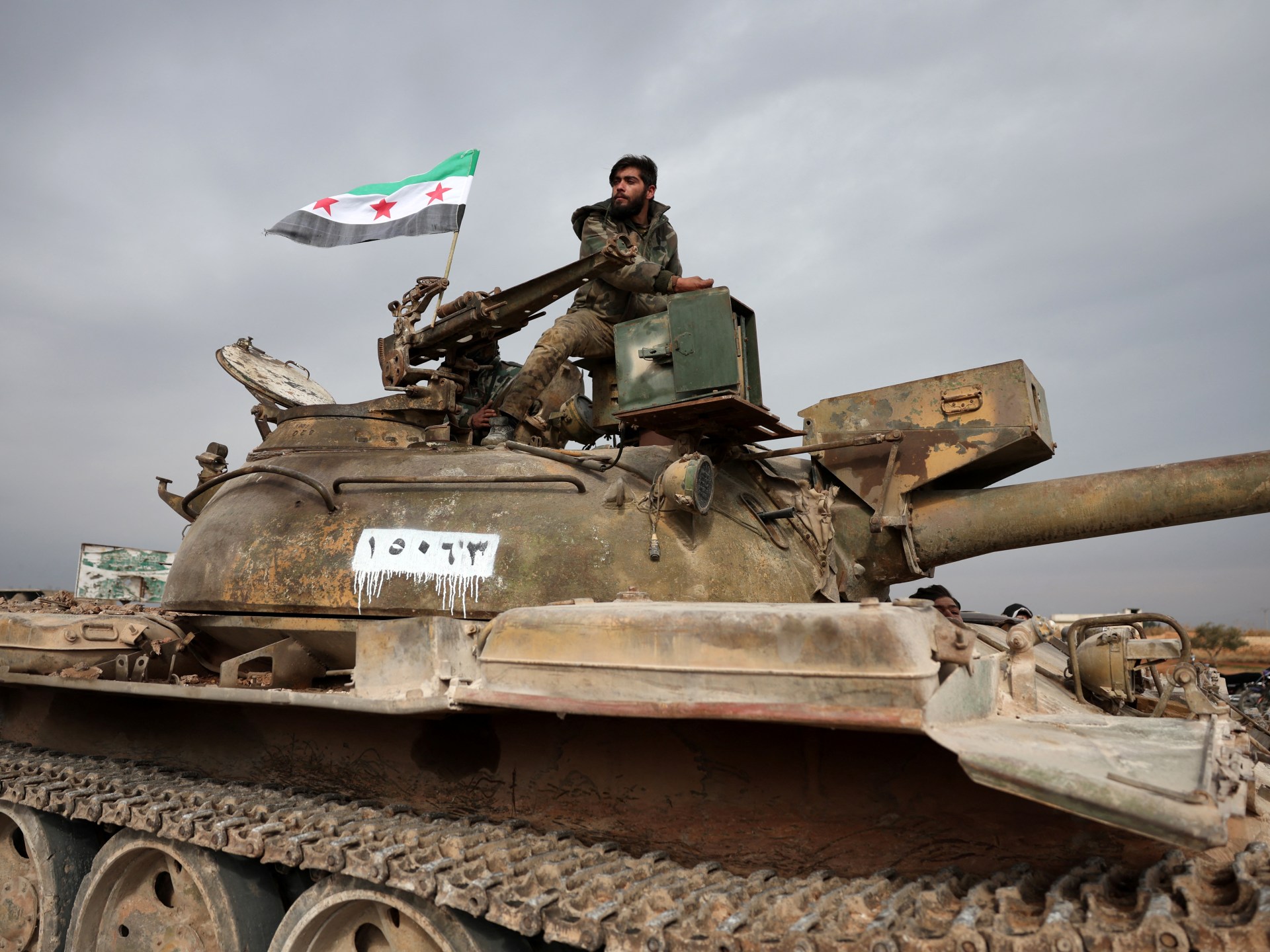
The United States has urged Syrian troops to halt their advance through Kurdish-held territory in Syria’s north, amid clashes with Kurdish-led forces over strategic posts and oilfields along the Euphrates River.
The rapid advance of Syrian troops on Saturday came after the Kurdish-led Syrian Democratic Forces (SDF) agreed to retreat east of the river, following recent fighting in Aleppo and areas east of the city over stalled plans to merge the SDF into the Syrian state.
Recommended Stories
list of 3 items
- list 1 of 3Syria decree grants Kurds new rights, formally recognising Kurdish language
- list 2 of 3Photos: Syrian army enters Deir Hafer after SDF withdrawal
- list 3 of 3Syrian army takes control of east Aleppo towns as Kurdish fighters withdraw
end of list
Brad Cooper, who heads the US military’s Central Command (CENTCOM), wrote on X that Syrian troops should “cease any offensive actions in areas” between the city of Aleppo and the town of Tabqa, approximately 160km (100 miles) further east in the Raqqa governorate.
On Saturday, the Syrian Army Operations Command told Al Jazeera Arabic that the military had entered Tabqa, a strategic town near a dam and a military airbase. The SDF denied the claim, saying its forces were “still in their positions” there.
The Syrian state-run news agency SANA lated reported that government forces had taken control of the town.
‘Betrayal’
The SDF had said it would pull back from the key towns of Deir Hafer and Maksana, as well as some surrounding villages in the Aleppo governorate, whose residents are predominantly Arab.
Syria’s army took control of the area on Saturday and accused the SDF of violating a withdrawal agreement by targeting an army patrol near Maksana, “killing two soldiers”.
The SDF, meanwhile, accused Damascus of violating the agreement by entering the towns “before our fighters had fully withdrawn”.
Later, Syrian troops advanced further, with state news agency SANA reporting they had expanded into the Raqqa countryside, entering Kurdish-controlled towns and villages, including Hneida, Rajm al-Ghazal, Mansoura and Zur Shamar, and imposing a curfew in the Maadan area, as they raced closer to Tabqa.
The SDF accused Damascus of betrayal. “Heavy clashes continue between our forces and Damascus factions, who violated the recent agreements and betrayed our forces during the implementation of the withdrawal provisions,” it said in a statement, adding that parts of Raqqa had been “subjected to artillery shelling and rocket fire”.
But the SDF said in a statement on Saturday that Tabqa was “outside the scope of the agreement” and that it would fight to keep the town, as well as an oilfield in its vicinity.
Reporting from Aleppo, Al Jazeera’s Zein Basravi said there was ongoing shelling in the Raqqa governorate.
“Judging by the amount of weapons, the amount of long-range artillery, the truckloads of ammunition we saw going in that direction, it is unsurprising,” he said.
“There are fights ongoing for oilfields that were controlled by the SDF, so this is a very ongoing, active theatre of operations, and things are moving very quickly,” he added.
The Syrian Petroleum Company said on Saturday that it had taken over the al-Rasafa and Safyan oilfields from the Syrian Army shortly after soldiers seized the areas of Deir Hafer and Maskana from the SDF.
Unresolved issue
The US has had to recalibrate its Syria policy to balance years of backing for the SDF, with whom it was allied in the fight against ISIL (ISIS), and its support for the new Syrian president, Ahmed al-Sharaa, whose forces ousted Bashar al-Assad in late 2024.
US envoy Tom Barrack travelled to Erbil in the Kurdish region of northern Iraq on Saturday to meet with Abdi and Iraqi Kurdish leader Masoud Barzani.
The Kurdish region’s authorities welcomed a decree announced on Friday that formally recognises the Kurdish language and restores citizenship to Kurdish Syrians, but said that it needed to be translated into law and enshrined in the constitution.
From Baghdad, Al Jazeera’s Bernard Smith said that behind the “conciliatory words” lay the “unresolved issue of how to integrate these tens of thousands of heavily armed, well-trained SDF fighters into the Syrian Army”.
“It was supposed to start last year. It never got going by the end of the year. That’s what led to these clashes earlier in January,” he said.

 admin
admin