newspost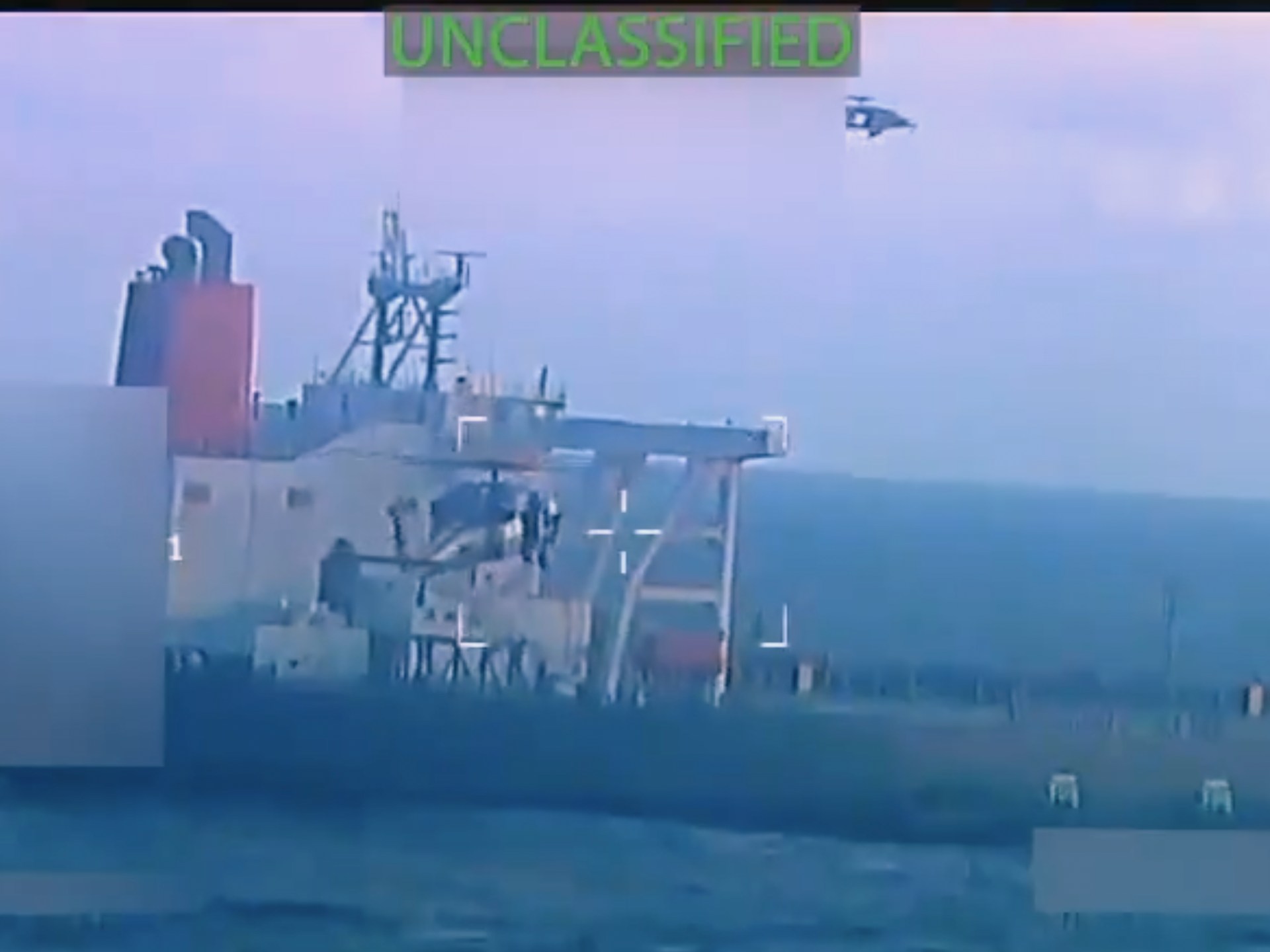
On September 2, United States President Donald Trump released grainy footage of a missile obliterating a fishing boat off Venezuela’s coast. Eleven people died instantly. The administration called them narcoterrorists. Venezuelan sources identified them as fishermen. Since then, the US military has conducted at least 22 strikes, killing 87 people, with investigations revealing that the first attack included a second strike to kill two survivors clinging to wreckage — a potential war crime under international law. On Wednesday, the US went on to seize an oil tanker in Venezuelan waters, an escalation the Venezuelan government described as “blatant theft” and an “act of international piracy,” underscoring Washington’s shift towards economic coercion alongside military force.
The Trump administration frames all this as “counter-narcotics”. Critics call it regime change. But the most dangerous dimension of this crisis has nothing to do with Venezuela at all. It is about the consolidation of executive power at home.
The oil narrative does not add up
If this were about oil, nothing about the current approach makes sense. The US produces more oil than any country in history, exporting millions of barrels daily. Neither America nor Europe faces an oil shortage that would require military intervention. Venezuela, meanwhile, sits atop the world’s largest proven reserves — 303 billion barrels — but its oil infrastructure is severely deteriorated. Production has collapsed from 3.2 million barrels per day in 2000 to roughly 900,000 today. The country’s pipelines have not been updated in 50 years, and restoring peak production capacity would require an estimated $58bn in investment, underscoring how far the sector is from posing any strategic threat that might justify military force.
More tellingly, legal pathways to Venezuelan oil already exist. The US could lift sanctions, expand Chevron’s operations, or reopen the energy corridor — measures that require neither warships nor circumventing Congress. In fact, Chevron’s operations in Venezuela represent 25 percent of the country’s total production, demonstrating that commercial access is entirely possible within existing frameworks. This contradiction exposes how little the current strategy has to do with securing resources. Trump’s own Treasury Secretary Scott Bessent acknowledged the complexity, describing sanctions policy as a balancing act between displacing China and providing foreign currency to Venezuelan President Nicolas Maduro.
The fundamental shift in Washington’s Venezuela calculus has less to do with oil companies and more to do with private equity firms and defence contractors — interests focused not on barrels but on reconstruction contracts, mineral rights and territorial leverage in a post-Maduro scenario. Together, these dynamics make clear that the logic driving US policy lies outside the economics of oil itself.
What emergency powers actually enable
The Venezuela narrative serves a different function: it provides the pretext for expanded executive authority through emergency declarations. Since 2015, the US has maintained a continuous “national emergency with respect to Venezuela” under the National Emergencies Act. This declaration unlocks access to more than 120 specific statutory powers, including asset seizures, commerce regulation and military deployment — authorities that bypass normal congressional authorisation and operate with minimal legislative oversight.
Trump has systematically layered additional emergency measures. In March, he designated Tren de Aragua as a foreign terrorist organisation, expanded the legal definition of Venezuela’s government to encompass virtually any affiliated entity — from ministries to state-owned firms — and imposed 25 percent tariffs on countries importing Venezuelan oil. In August, he signed a secret directive authorising military force against Latin American drug cartels — a decision taken without coastguard involvement and relying solely on Navy assets, breaking with decades of maritime interdiction precedent and further consolidating executive discretion.
Defence Secretary Pete Hegseth framed the scope clearly when he declared that alleged drug operations “will not be controlled by cartels” and promised to “map your networks, track your people, hunt you down and kill you” — language more consistent with warfare than law enforcement. Secretary of State Marco Rubio went further, stating that the Maduro regime is “not a legitimate government” but rather “a transshipment organisation” that facilitates drug trafficking — a characterisation that redefines diplomatic relations as a criminal enterprise and justifies treating state actors as targets.
Congress abdicates oversight
What makes this deployment unprecedented is not its size — though assembling carrier strike groups, B-52 bombers, F-35 fighters, submarines and more than 15,000 personnel represents the most significant US military presence in Latin America since the Cold War — but the absence of congressional authorisation. Lawmakers from both parties have complained they were not provided with legal justification, target lists or evidence about those killed. The Senate has twice rejected resolutions to limit Trump’s military authority on Venezuela, leaving executive power in effect, unchecked.
Senator Lindsey Graham made the administration’s objective explicit, telling CBS that regime change is the goal and Trump “has all the authority in the world” to conduct strikes. Legal experts broadly characterise the maritime attacks as illegal under both US and international law. Yet classified briefings to congressional leadership — including recent sessions in which Hegseth refused to commit to releasing unedited strike footage — have produced no meaningful constraint on executive action.
The pattern emerging is one of expanding presidential discretion: once invoked, emergency powers become self-perpetuating tools that normalise unilateral military action. Rather than being used for targeted interdiction, they are increasingly employed to engineer confrontation and accelerate regime change — all without a congressional declaration of war.
The real cost
The most insidious aspect of this crisis is that it manufactures a threat precisely calibrated to validate expanded executive power. Oil does not provide that pretext — a foreign emergency large enough to activate military force — and label as terrorism does. This permits the exercise of authority without Congress, without oversight and, increasingly, without resistance.
Venezuela becomes useful not for its resources but for its role as a political prop in a constitutional drama. While Trump has openly threatened land strikes and stated that the airspace above Venezuela should be considered closed, the administration is quietly drafting day-after plans for what happens if Maduro is ousted — planning that proceeds regardless of congressional authorisation or international law.
The Venezuelan people, already suffering under economic collapse and political repression, now face the prospect of becoming collateral damage in someone else’s power consolidation project. More than seven million Venezuelans have fled abroad, and those who remain endure the escalating danger of a manufactured crisis designed not to liberate them but to serve distant political calculations.
This is not an oil grab. It is a power grab — one that uses Venezuela as a pawn while setting precedents that will outlast any single administration. The question is not whether Maduro’s regime deserves international condemnation; it does. The question is whether democracies should abandon their own constitutional principles to achieve regime change abroad. On the current trajectory, the answer appears to be yes — and that is the most dangerous precedent of all.
The views expressed in this article are the author’s own and do not necessarily reflect Al Jazeera’s editorial stance.

 poster