admin
admin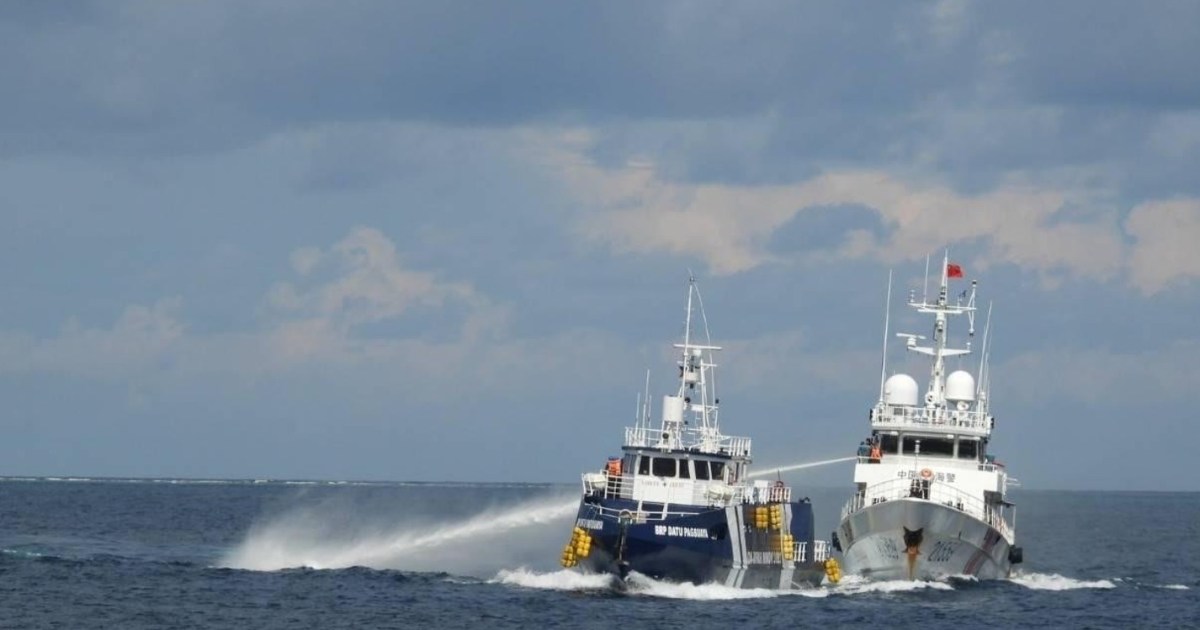
But China’s coastguard says Manila is to blame for the latest collision in disputed waters in the Spratly archipelago.
The Philippines has accused China of “deliberately” ramming a Philippine government vessel and causing minor damage near an island in a disputed area of the South China Sea.
China, however, blamed the Philippines for the collision on Sunday, claiming the Philippine vessel had “dangerously approached” its ship.
Recommended Stories
list of 3 items
- list 1 of 3US condemns Beijing’s South China Sea ‘nature reserve’ plan
- list 2 of 3China’s military warns Philippines against provocations in South China Sea
- list 3 of 3Chinese, Philippine ships collide near disputed shoal in South China Sea
end of list
Confrontations between Philippine and Chinese vessels occur frequently in the South China Sea, which Beijing claims nearly in its entirety.
A United Nations-backed tribunal, however, has ruled China’s claims have no legal basis.
The Philippine coastguard, in a statement, said a Chinese coastguard ship “fired its water cannon” at the BRP Datu Pagbuaya, a vessel belonging to Manila’s fisheries bureau, at 9:15am (01:15 GMT) on Sunday.
Minutes later, the same vessel “deliberately rammed” the stern of the Philippine fisheries bureau vessel, causing “minor” damage to the boat. No crew members were injured, it said.
The incident took place near Thitu Island, it said, part of the Spratly Islands, where Beijing has sought to assert its sovereignty claims for years, it added.
Thitu Island, known in China as Zhongye Island and in the Philippines as Pag-asa, is the largest of nine islands, islets and reefs inhabited by Philippine forces in the Spratly Islands and also has a fishing community.
The Philippine coastguard spokesman, Commodore Jay Tarriela, in a post on X, described the latest “aggressive action” by China as “bullying”.
One of the videos posted by Tarriela showed the Chinese vessel briefly colliding with the Filipino vessel, which then made a sharp manoeuvre.
The Filipino-manned ship is seen moving away from the Chinese coastguard ship.
Another video also showed the Chinese vessel firing a water cannon in the direction of the Philippine fisheries vessel.
Philippine coastguard chief Admiral Ronnie Gil Gavan said the latest incident “only strengthens” the resolve of Manila “to not surrender a square inch of our territory to any foreign power”.
China dismissed the claims in a statement.
Chinese coastguard spokesman Liu Dejun said the incident occurred when the Philippine ship “ignored repeated stern warnings from the Chinese side, and dangerously approached” the other ship.
“Full responsibility lies with the Philippine side,” Liu said in an online statement.
Beijing has also repeatedly accused Manila of provocations in the disputed South China Sea, while also accusing it of acting as a proxy of the United States.

 poster
 newspost