poster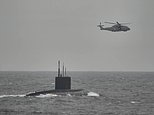
Britain’s Royal Air Force scrambled spy planes as it joined NATO in a huge hunt for a Russian submarine suspected of threatening a US aircraft carrier off Norway.
In what defence sources are calling a ‘highly unusual surge’ of activity, NATO allies have deployed at least 27 specialist submarine-hunting sorties since Sunday in an urgent bid to track the vessel.
The operation, which insiders insist is not a drill, comes as the USS Gerald R. Ford – the most advanced and expensive aircraft carrier in the world, worth around £11 billion, carries out exercises with the Norwegian Navy in Arctic waters.
The Royal Air Force has dispatched eight P-8A Poseidon aircraft from RAF Lossiemouth in Scotland, while the Norwegian Air Force launched three more flights from Evenes Air Base near Narvik, deep inside the Arctic Circle.
The US Navy has also scrambled patrol planes from a base in Iceland and flown in reinforcements from Sicily to bolster the search effort, according to The Sun.
These Poseidon maritime patrol aircraft come with state-of-the-art anti-submarine sensors, torpedoes, missiles and sonar buoys.
They can be deployed to listen for underwater movement, giving NATO forces the ability to detect submarines operating deep below the surface.
Flight tracking websites revealed that one RAF Poseidon spent several hours hovering over the Norwegian Sea, around 60 miles west of the Lofoten Islands.
A Royal Navy specialist submarine hunting aircraft tracking a Russian submarine earlier this year. NATO allies have deployed at least 27 specialist submarine-hunting sorties since Sunday in an urgent bid to track the Russian vessel
Britain’s Royal Air Force scrambled spy planes as it joined NATO in a huge hunt for a Russian submarine suspected of threatening a US aircraft carrier off Norway
A Russian Navy submarine in Russian waters. Flight tracking websites revealed that one RAF Poseidon spent several hours hovering over the Norwegian Sea in the hunt for the sub
The USS Gerald R. Ford – the most advanced and expensive aircraft carrier in the world, worth around £11 billion, carries out exercises with the Norwegian Navy in Arctic
Many of the aircraft switched off their transponders during the mission to avoid revealing their positions.
The mission is thought to have started at around 7pm on Sunday and ran for nearly 48 hours as aircraft repeatedly scoured the suspected patrol zone.
At sea, the HMS Somerset, a specialist anti-submarine frigate, has also been deployed in Norwegian waters to assist in the search, alongside NATO vessels monitoring the High North.
The Ministry of Defence confirmed the operation was ongoing but refused to disclose any operational details.
A spokesperson said: ‘The UK’s P-8 Poseidon aircraft work continuously on operations, protecting national interests and keeping the UK and our allies safe. For security reasons, we will not comment on operational details.’
However, Ryan Ramsay, a former Royal Navy submarine commander, said the show of force was designed to underline NATO’s dominance in the region.
‘This is NATO showing they are in control,’ he said. ‘Either they have already found the submarine, or submarines, and they are holding it – or they haven’t got it yet and need to get hold of it.’
Similarly, former Navy commander Tom Sharpe added: ‘It looks like they have found a Russian submarine and they are hammering it. It is telling Russia: ‘We see you.’
The Norwegian Air Force launched three more flights from Evenes Air Base near Narvik, deep inside the Arctic Circle
A Russian cruise missile submarine surfaced north west of Bergen in Norway. Experts believe either the submarine has been caught or the allies are using a show of force to warn Russia
The incident comes as tensions remain high between NATO and Moscow following Russia’s invasion of Ukraine and increased military activity in the Arctic.
Western officials have repeatedly warned that Russian submarines are capable of disrupting vital undersea infrastructure, including transatlantic data cables and energy pipelines.
The Norwegian Sea forms part of the GIUK Gap, a strategic maritime choke point running between Greenland, Iceland and the UK, which has been a key NATO defence line since the Cold War.
Control of this region is critical for preventing Russian submarines from accessing the North Atlantic undetected.
The USS Gerald R. Ford, which only entered service in 2017, is the lead ship in the US Navy’s latest class of nuclear-powered supercarriers.
It can carry more than 75 aircraft, including F/A-18 fighter jets and advanced surveillance systems, and serves as a floating airbase for power projection.
Losing such a vessel – even temporarily – would be a huge blow to NATO forces and a significant propaganda victory for the Kremlin.