admin
admin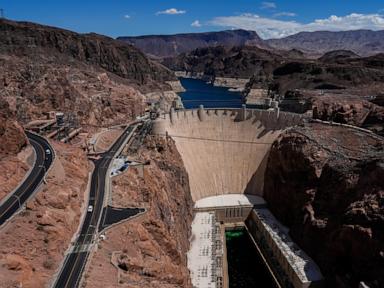
LOS ANGELES — Earlier this year, several environmental groups sent a petition to the federal government with a seemingly simple message: Ensure that water from the imperiled Colorado River is not wasted and only being delivered for “reasonable” and “beneficial” uses.
The organizations urged the Bureau of Reclamation to use its authority to curb water waste in the Lower Basin states: California, Arizona and Nevada. They argued it was necessary to help address the river’s water shortages.
The concept of reasonable and beneficial use is not new, but it’s being discussed at a crucial moment. Chronic overuse, drought and rising temperatures linked to climate change have shrunk water flows. States reliant on the river are approaching a 2026 deadline to decide on new rules for sharing its supplies, and they have until mid-November to reach a preliminary agreement or risk federal intervention.
The petitioning groups argue reducing water waste could help ensure the river has a sustainable future. But others worry cuts could bring hardship to farmers and consumers.
The river supports 40 million people across seven U.S. states, two states in Mexico and Native American tribes.
“We don’t have a management future for the Colorado River right now and it’s getting pretty scary,” said Mark Gold, adjunct professor at the University of California, Los Angeles, and former director of water scarcity solutions with the Natural Resources Defense Council, a petition group. “We should be dealing with this as a water scarcity emergency, and one of the things that you really want to do in an emergency is, let’s deal with water waste first.”
The bureau has not responded to the petition. In a statement to The Associated Press, the agency said it continues to operate with the agreements and rules in place and has other strategies to “reduce the risk of reaching critical elevations” at the river’s reservoirs, Lakes Powell and Mead.
A bureau code says “deliveries of Colorado River water to each Contractor will not exceed those reasonably required for beneficial use.”
But Cara Horowitz, director of UCLA’s Frank G. Wells Environmental Law Clinic, wasn’t sure what that meant or how it’s applied. So she and her students sought to find out with government records.
“As best as we could tell, it’s never defined the phrase and it does not use the phrase in any meaningful way as it’s making water delivery decisions,” said Horowitz, who is representing the groups. They believe the bureau needs a reformed process to determine whether states are avoiding wasteful and unreasonable use. In the petition, the groups urged the bureau to address those issues and perform periodic reviews of water use.
Experts say that defining reasonable and beneficial use could be challenging, but some argue it’s worth a try. Others worry that allowing an authority to determine what’s wasteful could have negative impacts.
“It’s potentially a whole can of worms that we need to approach very carefully,” said Sarah Porter, the Kyl Center for Water Policy director at Arizona State University. “Who gets to be the entity that decides what’s an appropriate amount of use for any particular water user or community?”
The groups see it differently. For example, they think farmers should be incentivized to change “wasteful” irrigation practices and consider growing crops better suited for certain climates. An example they gave of “unreasonable” use is year-round flood irrigation of thirsty crops in deserts. In cities and industries, wasteful use includes watering ornamental turf or using water-intensive cooling systems.
In a 2003 case, the bureau invoked the provision when it ordered water reductions to California’s Imperial Irrigation District, the largest river water user, after determining it couldn’t beneficially use it all. The district sued and the dispute eventually settled.
Popular Reads
California’s Imperial Valley relies 100% on Colorado River water. The desert’s temperate, mild winters are ideal for growing two-thirds of winter vegetables consumed nationally.
Andrew Leimgruber, a fourth-generation farmer here, has tried to reduce his use with water-savings programs. He grows crops like carrots, onions and mostly alfalfa, which he often flood-irrigates because it fills the plant’s deep root system. For up to 60 days in the summer, he doesn’t water it at all.
Water cuts because of “unreasonable” use could mean people won’t be able to eat a Caesar salad in New York City in January, Leimgruber said. He worries about short-term food shortages and putting farmers out of business.
Bill Hasencamp, manager of Colorado River Resources for the Metropolitan Water District of Southern California, said the agency supports an annual process to ensure water is being beneficially used, even as that definition changes, but he doesn’t think it’s meant to solve the river’s existential crisis. He worries invoking this tool could result in litigation. “Once things go to court, there’s always a wild card that’s sort of out of anyone’s control.”
Some experts point to California’s constitution as a potential model, which contains a provision on reasonable and beneficial use. How that is interpreted is fluid and decided by state water regulators, or the courts.
“The way it’s written is actually very adaptable to the times, so it’s actually about what is wasted and reasonable use in a given time,” said Felicia Marcus, fellow at Stanford University’s Water in the West program and former chair of the California State Water Resources Control Board. “So things that would have seemed to be reasonable 50 years ago, no longer are.”
The state water board has invoked its beneficial and reasonable use provision in times of drought, for example, to help support using less water in cities. It’s deemed washing sidewalks or washing cars in driveways as unreasonable. In another case, the water agency argued and won that it was unreasonable for a senior water rights holder to take so much water that fish couldn’t swim to cold water refuges.
Water regulators have also threatened to apply their unreasonable use authority to get the holders of water rights to better manage their use. “It’s a tool that gets used as both a threat and a backstop,” said Marcus.
Leimgruber, the Imperial Valley farmer, said limiting population growth and expansion in arid areas could help. John Boelts, a farmer and Arizona Farm Bureau president, suggested more desalination projects. And Noah Garrison, a water researcher at UCLA, found in a recent study he co-authored that states could do more to recycle wastewater.
Still, as decades-long droughts plague parts of the basin and with critical deadlines approaching, some experts say it’s time for the bureau to be more assertive.
“There’s responsibility here to be the water master on the river or it gets thrown to the Supreme Court, which will take years to work its way through,” said Marcus. The “beneficial use petition is one way to say, ‘Here’s a tool you have, step up and consider it.’”
___
The Associated Press receives support from the Walton Family Foundation for coverage of water and environmental policy. The AP is solely responsible for all content. For all of AP’s environmental coverage, visit https://apnews.com/hub/climate-and-environment.


 newspost
 poster