poster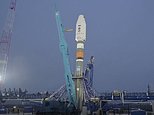
A trio of secretive Russian military satellites have released a mystery object into orbit, reigniting fears that Moscow is developing a space-based platform to launch missiles or nuclear weapons into space.
The Kosmos 2581, 2582 and 2583 satellites launched into orbit from Plesetsk Cosmodrome in northern Russia in February this year.
The United States Space Force (USSF) catalogued a new object in orbit this week that officials believe may have separated from Kosmos 2583 on March 18, Space.com reports.
Officials warn the object could be used for a variety of purposes including military experiments, satellite inspection or target practice. The Kremlin may also be testing flying or docking technology.
It is possible that the mystery object could be a result of ‘unintentional fragmentation’, but experts note that in those cases there are typically multiple pieces of debris.
Moscow has not released any information about the satellite trio or their mission, with experts noting that several previous Kosmos missions were classified.
Russia blasted its Kosmos 2553 satellite through the atmosphere atop a Soyuz-2 rocket in February 2022, just days before Vladimir Putin ordered troops across the border into Ukraine.
US Officials revealed last December that Space Command suspected the Kosmos 2553 may be testing components for a Russian space weapon and is monitoring it daily for signs of a threat.
The United States Space Force (USSF) catalogued a new object in orbit this week that officials believe may have separated from Russia’s Kosmos 2583 satellite (pictured) on March 18
The Kosmos 2581, 2582 and 2583 satellites launched into orbit from Plesetsk Kosmodrome in northern Russia in February this year
US Space Command and space trackers have been monitoring the behaviour of the Kosmos 2581, 2582 and 2583 satellites since their launch in February.
Officials say that since the launch they have been in a ‘near-polar orbit roughly 364 miles above Earth’.
But astrophysicist and spaceflight activity tracker Jonathan McDowell revealed last month that the devices appeared to be conducting ‘proximity operations’.
Proximity operations involves manoeuvres where two or more spacecraft approach each other at close distances, typically for servicing, docking or inspection.
McDowell at the time said it ‘could just be coincidence of the fact they are in similar orbits’ and noted that there was ‘no evidence of targeting’.
It is not unusual for satellite triplets to fly in formation in orbit, according to Space.com, with both the US and China having released several trio sets into space.
But officials remain sceptical of the Kosmos trio, especially after fear over the prospect of a space arms race was sparked last year after it emerged US intelligence officials suspected Russia was aiming to deploy nuclear weapons in space.
It is unclear exactly what kind of weapons system Moscow plans to deploy, but according to early reports from US government sources, a space-based nuke would be used to attack satellites in orbit rather than strike targets on the ground.
Citing the satellite’s behaviour (pictured in the graph above), astrophysicist and spaceflight activity tracker Jonathan McDowell revealed last month that Kosmos trio appeared to be conducting ‘proximity operations’
Moscow has not released any information about the satellite trio or their mission, with experts noting that several previous Kosmos missions were classified (Pictured: Kosmos 2583)
This co-orbital anti-satellite weapon (ASAT) would be launched into orbit and circle the Earth before deploying some kind of nuclear device – either a bomb or a projectile – that would detonate in the proximity of enemy assets to destroy them in the original explosion, or fry their components with the resulting electromagnetic discharge.
Russia conducted a daring test in 2022 that saw two Kosmos satellites stage close fly-bys of a US KH-11 spy satellite, while a third tested its ability to fire a high-velocity shell.
Theoretically, such a weapon could destroy individual satellites without risking the collateral damage caused by a nuclear detonation and the resulting EMP.
But the destruction of the satellite would send thousands of fragments of debris hurtling through space.
This material could utterly devastate any other tech in orbit that collides with it, including the International Space Station, until the lethal fragments finally burn up in Earth’s atmosphere.
Last year, Russia vetoed a UN resolution calling on all nations to prevent a dangerous nuclear arms race in outer space, further stoking fears Moscow may be gearing up for a catastrophic cosmic escalation.
The resolution would have called on all countries not to develop or deploy nuclear arms or other weapons of mass destruction in space, as banned under a 1967 international treaty that included the US and Russia.
The Kosmos 2553 satellite was blasted through the atmosphere atop a Soyuz-2 rocket from Russia’s Plesetsk Kosmodrome in February 2022 (pictured)
Russia opposed the resolution, while China abstained, meaning the resolution did not pass despite the support of 13 other nations.
Putin has previously said he has no intention of deploying nuclear weapons in space – but Moscow’s refusal to green-light the resolution led Western lawmakers to question the Kremlin’s true intentions.
China has also been increasing its space capabilities at an alarming rate. In 2022 it conducted an apparently successful test of a nuclear-capable hypersonic glide vehicle and has developed an array of anti-satellite weaponry.
As a result, analysts fear that a new space arms race could be on the cards, leading to a slew of fearsome new weapons and military tech orbiting the Earth.



 admin
admin