admin
admin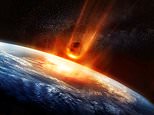
It might sound like a terrifying scene from an apocalyptic science-fiction film.
But the world’s space agencies have now made a rare emergency decision as the chances of Earth being hit by a ‘city-killer asteroid’ rise.
Astronomers predict that the asteroid 2024 YR4 currently has a one-in-43 (2.3 per cent) chance of colliding with Earth in 2032.
As the risk increases, an international team of astronomers has been granted use of the James Webb Space Telescope (JWST) to determine how much damage the asteroid would cause.
Astronomers will use the JWST to measure the exact size of 2024 YR4 and make the final calculations about its orbit.
The best estimates currently suggest the asteroid is up to 90m (300 ft) wide.
That would make it around the same size as New York’s Statue of Liberty or London‘s Big Ben.
Worryingly, this would make its impact equivalent to the Tunguska asteroid – which flattened 830 square miles (2,150 square km) of Siberian forest in 1908.
As the chances of the ‘city-killing’ asteroid 2024 YR4 hitting Earth increase, the world’s space agencies have made a rare emergency decision (stock image)
2024 YR4 was first spotted in late December last year by the NASA-funded Asteroid Terrestrial-impact Last Alert System station in Chile.
Even with an estimated impact probability of just 1.3 per cent at the time, it was still by far the biggest threat to Earth and shot to the top of NASA’s and ESA’s risk lists.
With an estimated diameter of up to 90 metres (300 feet), the asteroid could do some serious damage should it hit Earth.
However, early estimates of the asteroid’s size could prove incorrect.
When scientists want to know how big an asteroid is, they use a very powerful telescope to measure the light reflected from its surface.
In general, the larger an asteroid, the brighter it will appear, but this is not always the case.
An ESA spokesperson says: ‘2024 YR4 could be 40 m [130 feet] across and very reflective, or 90 m [295 feet] across and not very reflective.’
Additionally, even the best telescopes on Earth still have to peer through Earth’s atmosphere to look at objects in space.
2024 YR4 (pictured) was first spotted in late December last year by the NASA-funded Asteroid Terrestrial-impact Last Alert System station in Chile. Scientists predict it has a one-in-43 chance of hitting Earth in 2032
The air above a telescope’s lens bends and distorts beams of light, just like looking at something at the bottom of a pool, making it harder to get an accurate picture.
The JWST will overcome both of these issues by taking images of 2024 YR4 from its position 1 million miles (1.5 million km) away from Earth.
That allows the space telescope to avoid any interference from Earth’s distorting atmosphere and capture more information than reflected light.
Using its suite of infrared sensors, the JWST will also look at the heat radiating off the asteroid, which gives a much more accurate estimate of the asteroid’s size.
This information will help Earth’s planetary defence organisations plan accordingly and determine whether action is needed to deflect the asteroid.
The ESA spokesperson says: ‘Astronomers around the world are using powerful telescopes to measure the asteroid’s orbit as accurately as possible. But knowing its orbit will only tell us the asteroid could impact Earth, not how significant an impact could be.
‘It is very important that we improve our size estimate for 2024 YR4: the hazard represented by a 40 m asteroid is very different from that of a 90 m asteroid,” ESA added.’
Even at its current estimated size, experts predict that 2024 YR4 could explode with the energy of 15 megatons of TNT, were it to hit Earth.
The European Space Agency has been given emergency access to the James Webb Space Telescope (pictured) to measure the asteroid’s size more accurately
What do we know about 2024 YR4?
First detected: December 27, 2024
Estimated size: 40-90 metres (130-300 feet)
Speed relative to Earth: 29,000 miles per hour (46,800 kmph)
Date of closest pass: December 2, 2032
Probability of impact: 2.3 per cent (one in 43)
Destructive potential: A ‘city killer’ on a scale on the Tunguska asteroid, which detonated with a force equal to 15-30 megatons of TNT.
That is 100 times more power than the nuclear bomb which was dropped on Hiroshima at the end of World War II, which killed between 100,000 and 180,000 people.
Based on these figures, estimates suggest that the impact would flatten residential structures and cause fatalities up to 2 miles (18.9 km) in any direction from the epicentre.
However, these effects would still be ‘local’ on the scale of asteroid impacts and would not cause any catastrophic or extinction-level event.
By comparison, a collision with the 500-metre-wide asteroid Bennu would release enough dust into the atmosphere to trigger an ‘impact winter’ which would drop global temperatures by 4˚C (7.2˚F).
The JWST will make two observations of the asteroid as it passes within visual range of Earth.
The first observation will come in March when the asteroid reaches its peak brightness.
The scientists will then make another observation in May as the asteroid travels out into space, the last chance to see it before it returns in 2028.
By making two separate observations, scientists will be able to see how the asteroid’s temperature has changed due to its time near the sun and further refine their predictions of its orbit.
Scientists currently predict that the probability of 2024 YR4 hitting Earth should collapse towards zero as more data is collected.
Overall, ESA’s team of scientists will use no more than four hours of the JWST’s tightly controlled schedule.
This time has been taken from the ‘director’s discretionary time’, a special budget of hours reserved for time-sensitive operations that cannot wait for the normal proposal process.
ESA adds that any data gathered about 2024 YR4 will be made publicly available.
WHAT COULD WE DO TO STOP AN ASTEROID COLLIDING WITH EARTH?
Currently, NASA would not be able to deflect an asteroid if it were heading for Earth but it could mitigate the impact and take measures that would protect lives and property.
This would include evacuating the impact area and moving key infrastructure.
Finding out about the orbit trajectory, size, shape, mass, composition and rotational dynamics would help experts determine the severity of a potential impact.
However, the key to mitigating damage is to find any potential threat as early as possible.
NASA and the European Space Agency completed a test which slammed a refrigerator-sized spacecraft into the asteroid Dimorphos.
The test is to see whether small satellites are capable of preventing asteroids from colliding with Earth.
The Double Asteroid Redirection Test (DART) used what is known as a kinetic impactor technique—striking the asteroid to shift its orbit.
The impact could change the speed of a threatening asteroid by a small fraction of its total velocity, but by doing so well before the predicted impact, this small nudge will add up over time to a big shift of the asteroid’s path away from Earth.
This was the first-ever mission to demonstrate an asteroid deflection technique for planetary defence.
The results of the trial are expected to be confirmed by the Hera mission in December 2026.


 newspost