poster
WASHINGTON — No one knows how Tuesday’s presidential election will turn out, but the Federal Reserve’s move two days later is much easier to predict: With inflation continuing to cool, the Fed is set to cut interest rates for a second time this year.
The presidential contest might still be unresolved when the Fed ends its two-day meeting Thursday afternoon, yet that uncertainty would have no effect on its decision to further reduce its benchmark rate. The Fed’s future actions, though, will become more unsettled once a new president and Congress take office in January, particularly if Donald Trump were to win the White House again.
Trump’s proposals to impose high tariffs on all imports and launch mass deportations of unauthorized immigrants and his threat to intrude on the Fed’s normally independent rate decisions could send inflation surging, economists have said. Higher inflation would, in turn, compel the Fed to slow or stop its rate cuts.
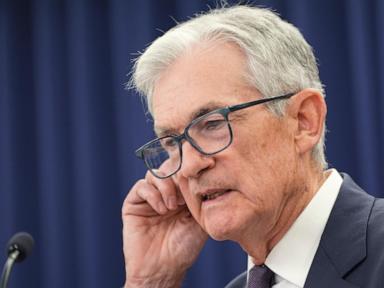
On Thursday, the Fed’s policymakers, led by Chair Jerome Powell, are on track to cut their benchmark rate by a quarter-point, to about 4.6%, after having implemented a half-point reduction in September. Economists expect another quarter-point rate cut in December and possibly additional such moves next year. Over time, rate cuts tend to lower the costs of borrowing for consumers and businesses.
The Fed is reducing its rate for a different reason than it usually does: It often cuts rates to boost a sluggish economy and a weak job market by encouraging more borrowing and spending. But the economy is growing briskly, and the unemployment rate is a low 4.1%, the government reported Friday, even with hurricanes and a strike at Boeing having sharply depressed net job growth last month.
Instead, the central bank is lowering rates as part of what Powell has called “a recalibration” to a lower-inflation environment. When inflation spiked to a four-decade high of 9.1% in June 2022, the Fed proceeded to raise rates 11 times — ultimately sending its key rate to about 5.3%, also the highest in four decades.
But in September, year-over-year inflation dropped to 2.4%, barely above the Fed’s 2% target and equal to its level in 2018. With inflation having fallen so far, Powell and other Fed officials have said they think high borrowing rates are no longer necessary. High borrowing rates typically restrict growth, particularly in interest-rate-sensitive sectors such as housing and auto sales.
“The restriction was in place because inflation was elevated,” said Claudia Sahm, chief economist at New Century Advisors and a former Fed economist. “Inflation is no longer elevated. The reason for the restriction is gone.”
Fed officials have suggested that their rate cuts would be gradual. But nearly all of them have expressed support for some further reductions.
“For me, the central question is how much and how fast to reduce the target for the (Fed’s key) rate, which I believe is currently set at a restrictive level,” Christopher Waller, an influential member of the Fed’s Board of Directors, said in a speech last month.
Jonathan Pingle, an economist at Swiss bank UBS, said that Waller’s phrasing reflected “unusual confidence and conviction that rates were headed lower.”
Next year, the Fed will likely start to wrestle with the question of just how low their benchmark rate should go. Eventually, they may want to set it at a level that neither restricts nor stimulates growth — “neutral” in Fed parlance.
Powell and other Fed officials acknowledge that they don’t know exactly where the neutral rate is. In September, the Fed’s rate-setting committee estimated that it was 2.9%. Most economists think it’s closer to 3% to 3.5%.
The Fed chair said the officials have to assess where neutral is by how the economy responds to rate cuts. For now, most officials are confident that at 4.9%, the Fed’s current rate is far above neutral.
Some economists argue, though, that with the economy looking healthy even with high borrowing rates, the Fed doesn’t need to ease credit much, if at all. The idea is that they may already be close to the level of interest rates that neither slows nor stimulates the economy.
“If the unemployment rate stays in the low 4’s and the economy is still going to grow at 3%, does it matter that the (Fed’s) rate is 4.75% to 5%?” said Joe LaVorgna, chief economist at SMBC Nikko Securities, asked. “Why are they cutting now?”
With the Fed’s latest meeting coming right after Election Day, Powell will likely field questions at his news conference Thursday about the outcome of the presidential race and how it might affect the economy and inflation. He can be expected to reiterate that the Fed’s decisions aren’t affected by politics at all.
During Trump’s presidency, he imposed tariffs on washing machines, solar panels, steel and a range of goods from China, which President Joe Biden maintained. Though studies show that washing machine prices rose as a result, overall inflation did not rise much.
But Trump is now proposing significantly broader tariffs — essentially, import taxes — that would raise the prices of about 10 times as many goods from overseas.
Many mainstream economists are alarmed by Trump’s latest proposed tariffs, which they say would almost certainly reignite inflation. A report by the Peterson Institute for International Economics concluded that Trump’s main tariff proposals would make inflation 2 percentage points higher next year than it otherwise would have been.
The Fed could be more likely to raise rates in response to tariffs this time, according to economists at Pantheon Macroeconomics, “given that Trump is threatening much bigger increases in tariffs.”
“Accordingly,” they wrote, “we will scale back the reduction in the funds rate in our 2025 forecasts if Trump wins.”

 newspost